Shorebirds of Los Haitises: Sandpipers, Plovers and Other Birds of the Mudflats
Los Haitises National Park is famous for its mangrove forests, limestone islands, caves and coastal scenery. But its birdlife is another reason nature enthusiasts find the area fascinating. Among the birds recorded in the park are shorebirds: a diverse group that includes sandpipers, plovers, yellowlegs, turnstones and stilts.
These birds are adapted to life around shallow water, muddy shorelines, sandbars and other wetland environments. Some search for tiny animals in soft mud, while others run across exposed surfaces to catch prey they spot with their eyes.
For visitors exploring Los Haitises from Sabana de la Mar, learning to recognize shorebirds adds another dimension to a nature excursion. Instead of looking only at the larger birds flying overhead, you can begin noticing the smaller species feeding along the edges of the water.
1. What are shorebirds?
Shorebirds are a broad group of birds commonly associated with shorelines and wetlands. Many have relatively long legs, bills adapted to finding small prey, and feeding behaviors suited to shallow water or exposed mud.
The group includes several different types of birds:
- Sandpipers: Often have narrow bills and search for small invertebrates by picking or probing.
- Plovers: Usually have shorter bills and frequently run, stop and pick prey from the surface.
- Yellowlegs: Have long legs and bills and often walk through shallow water while searching for food.
- Turnstones: Use their bills to turn over small stones, shells or seaweed while looking for prey.
- Stilts: Have exceptionally long legs that help them feed in shallow water.
Not all shorebirds look alike, and some can be difficult to identify without binoculars or a good photograph.
2. Which shorebirds are recorded in Los Haitises?
The Avibase checklist for Los Haitises National Park includes a range of shorebird species from several families.
Recorded species include:
Plovers
- Black-bellied Plover (Pluvialis squatarola)
- Killdeer (Charadrius vociferus)
- Semipalmated Plover (Charadrius semipalmatus)
- Snowy Plover (Anarhynchus nivosus)
Sandpipers and related species
- Hudsonian Whimbrel (Numenius hudsonicus)
- Wilson's Snipe (Gallinago delicata)
- Spotted Sandpiper (Actitis macularius)
- Solitary Sandpiper (Tringa solitaria)
- Lesser Yellowlegs (Tringa flavipes)
- Willet (Tringa semipalmata)
- Greater Yellowlegs (Tringa melanoleuca)
- Ruddy Turnstone (Arenaria interpres)
- Least Sandpiper (Calidris minutilla)
- Pectoral Sandpiper (Calidris melanotos)
- Western Sandpiper (Calidris mauri)
- Semipalmated Sandpiper (Calidris pusilla)
Other shorebirds
- Black-necked Stilt (Himantopus mexicanus)
This list is useful for understanding the park's recorded bird diversity. It is not a promise that every species can be seen during an ordinary visitor excursion. Some species may be seasonal visitors, uncommon in the area or difficult to observe.
3. Sandpipers: small birds with specialized feeding habits
Sandpipers are among the most interesting shorebirds to observe because many species feed actively along muddy edges.
They often walk with their heads lowered, picking at the surface or probing soft mud with their bills. Their prey can include small insects, worms, crustaceans and other aquatic invertebrates.
Least Sandpiper
The Least Sandpiper (Calidris minutilla) is particularly small. It is one of the tiniest shorebirds, and its size can make it difficult to notice among other birds.
Useful identification clues include:
- Very small body
- Brownish upperparts
- White underside
- Thin bill
- Yellowish or greenish legs
The legs are especially helpful when trying to distinguish it from some other small sandpipers, which usually have dark legs. However, mud can stain the legs and make identification more difficult.
Least Sandpipers use muddy shorelines and wetland edges to search for small invertebrates. They are also migratory birds, traveling between northern breeding areas and more southerly nonbreeding habitats.
Semipalmated Sandpiper
The Semipalmated Sandpiper (Calidris pusilla) is another small species included in the Los Haitises checklist.
It has a compact body, relatively short straight bill and dark legs. Its appearance changes somewhat between breeding and nonbreeding plumages, which can make identification more challenging.
Look for:
- Small, compact shape
- Short, straight dark bill
- Dark legs
- Gray-brown upperparts in nonbreeding plumage
- Fine breast markings in some plumages
This species is known for gathering in large flocks at some migration and wintering sites. Individual birds can be difficult to separate from other small sandpipers, so size, bill shape, leg color and behavior should be considered together.
Western Sandpiper
The Western Sandpiper (Calidris mauri) is another small migratory shorebird on the park checklist.
It can be challenging to distinguish from other small sandpipers. Its bill is often slightly drooping at the tip, and nonbreeding birds can appear pale gray above and white below.
For a beginner, the most useful lesson is not to rely on one feature. Compare the bill, legs, body proportions and overall plumage with a regional identification guide.
Pectoral Sandpiper
The Pectoral Sandpiper (Calidris melanotos) is larger than the tiny sandpipers described above.
It has a noticeable breast pattern, with streaking concentrated across the upper chest and a clearer boundary between the marked breast and pale belly. This can be useful when identifying it among other shorebirds.
Its longer legs and larger body also help separate it from the smallest sandpipers.
4. Plovers: birds that run, stop and search
Plovers often use a different feeding method from many sandpipers. Rather than continuously probing the mud, they frequently run a short distance, stop, look for prey and then pick it up.
This run-and-stop behavior is one of the most useful clues for recognizing plovers.
Semipalmated Plover
The Semipalmated Plover (Charadrius semipalmatus) is a small plover recorded in Los Haitises.
Look for:
- Compact body
- Brown upperparts
- White underside
- Short bill
- One dark band across the chest in typical adult plumage
Its small size and distinctive breast band can help identify it. The bird often feeds on open muddy or sandy surfaces rather than in deeper water.
Killdeer
The Killdeer (Charadrius vociferus) is a familiar plover with two dark breast bands. It is generally larger than the Semipalmated Plover.
Its name comes from its loud, distinctive calls. When seen on the ground, the two dark bands are among its most useful identification features.
Killdeers commonly feed by running and stopping to pick up insects and other small prey.
Black-bellied Plover
The Black-bellied Plover (Pluvialis squatarola) is a larger shorebird with a sturdy body and relatively short bill.
Its appearance changes between breeding and nonbreeding plumages. In breeding plumage, the black belly and contrasting markings are especially noticeable. During the nonbreeding season, the bird is generally more gray and white.
Because plumage varies, it is useful to consider body shape, bill size and other markings rather than depending on belly color alone.
Snowy Plover
The Snowy Plover (Anarhynchus nivosus) is a small, pale plover recorded in the Los Haitises checklist.
It generally has sandy-colored upperparts, a white underside and dark markings around the head and chest. Its pale appearance can blend into sandy or muddy surroundings.
As with other small plovers, observation from a respectful distance is important. Do not approach a bird simply to obtain a closer photograph.
5. Yellowlegs: long-legged visitors of shallow water
The Los Haitises checklist includes both Lesser Yellowlegs and Greater Yellowlegs.
These birds have long legs that allow them to walk through shallow water while searching for prey.
Lesser Yellowlegs
The Lesser Yellowlegs (Tringa flavipes) is a medium-sized shorebird with bright yellow legs, a slender dark bill and a relatively delicate appearance.
It often walks through shallow water, picking small aquatic animals from the surface or near the bottom.
Greater Yellowlegs
The Greater Yellowlegs (Tringa melanoleuca) is larger and generally has a longer, slightly upturned bill.
The two species can be difficult to separate when viewed from far away. Size is helpful, but it can be misleading when there is no nearby bird for comparison.
Compare:
- Overall body size
- Bill length
- Bill shape
- Leg length
- Calls, when heard clearly
Photographs and binoculars can help, but not every distant bird can be identified confidently.
6. Ruddy Turnstone: a shorebird that searches beneath objects
The Ruddy Turnstone (Arenaria interpres) has a distinctive feeding behavior.
As its name suggests, it uses its bill to turn over small objects while searching for food. These may include stones, shells, seaweed and other material along shorelines.
Its stocky body and relatively short, strong bill help distinguish it from many slender sandpipers.
During breeding plumage, it has striking patterns of black, white and warm chestnut. Nonbreeding plumage is generally less colorful.
Turnstones show how different shorebirds use different feeding strategies even when they occupy similar coastal environments.
7. Black-necked Stilt: the long-legged specialist
The Black-necked Stilt (Himantopus mexicanus) is one of the easiest shorebirds to recognize because of its unusually long, thin legs.
It has a black-and-white body, a slender dark bill and long pinkish-red legs.
The legs allow it to walk through water that would be too deep for many smaller shorebirds. It feeds by picking small aquatic animals from shallow water.
When watching a stilt, notice how high its body sits above the water. Its proportions are very different from those of a small sandpiper or plover.
8. Hudsonian Whimbrel and Wilson's Snipe
Not every shorebird in Los Haitises is a small bird feeding along an exposed mudflat.
Hudsonian Whimbrel
The Hudsonian Whimbrel (Numenius hudsonicus) is a large shorebird with a long bill that curves downward.
Its bill is adapted for probing soft ground and searching for prey. The bird's size and curved bill make it easier to distinguish from smaller sandpipers.
Wilson's Snipe
Wilson's Snipe (Gallinago delicata) has a long, straight bill and a patterned brown body that helps it blend into wet vegetation.
It searches for food in soft ground and wetland habitats. Its camouflage can make it difficult to notice when it remains still.
Both species demonstrate the variety of shapes and feeding adaptations found among shorebirds.
9. Why do shorebirds use mudflats and wetland edges?
Mudflats and shallow wetlands can provide abundant food for birds.
As water moves across a shoreline, it exposes or covers different areas of mud and sediment. These surfaces support small animals, including worms, insects, molluscs and crustaceans.
Different shorebirds can use different parts of the same habitat.
For example:
- Small sandpipers pick tiny prey from wet mud.
- Plovers often locate visible prey and run to catch it.
- Yellowlegs walk through shallow water.
- Turnstones search beneath loose material.
- Stilts feed in water that is relatively deep for smaller waders.
This variety of feeding methods reduces direct competition and allows multiple species to use a shared wetland environment.
10. Are shorebirds migratory?
Many shorebirds that visit the Caribbean are migratory. Some breed in northern parts of North America and travel south during the nonbreeding season.
The Caribbean provides important stopover and nonbreeding habitats for many of these birds.
Migration is one reason the shorebird community can change throughout the year. A bird that is visible during one period may be absent during another.
However, not every species on the Los Haitises checklist follows the same migration pattern. Some have different ranges or movement strategies. Visitors should therefore avoid assuming that every shorebird is present throughout the year.
11. How to identify shorebirds during a Los Haitises visit
Shorebird identification can be difficult because many species look similar, especially outside the breeding season.
A simple method is to examine several features together.
Start with size
Is the bird tiny, medium-sized or large Compare it with another bird nearby if possible.
Examine the bill
Bill length and shape can provide important clues.
- Short bills are common among many plovers.
- Narrow bills are common among sandpipers.
- Long, curved bills are characteristic of whimbrels.
- Long, slender bills are found in stilts and some other waders.
Look at the legs
Leg color can be helpful. Least Sandpipers, for example, often show yellowish legs, while Semipalmated Sandpipers have dark legs.
Observe how the bird feeds
Behavior is often more useful than color alone.
- Running and stopping may suggest a plover.
- Repeated probing may suggest a sandpiper.
- Turning over small objects may indicate a turnstone.
- Walking through deeper shallow water on extremely long legs may indicate a stilt.
Take photographs without approaching
A photograph can help you examine markings later. Use a zoom lens or binoculars rather than moving closer to the bird.
If you are uncertain, record the bird as an unidentified shorebird rather than guessing at the species.
12. Birdwatching habitats around Los Haitises
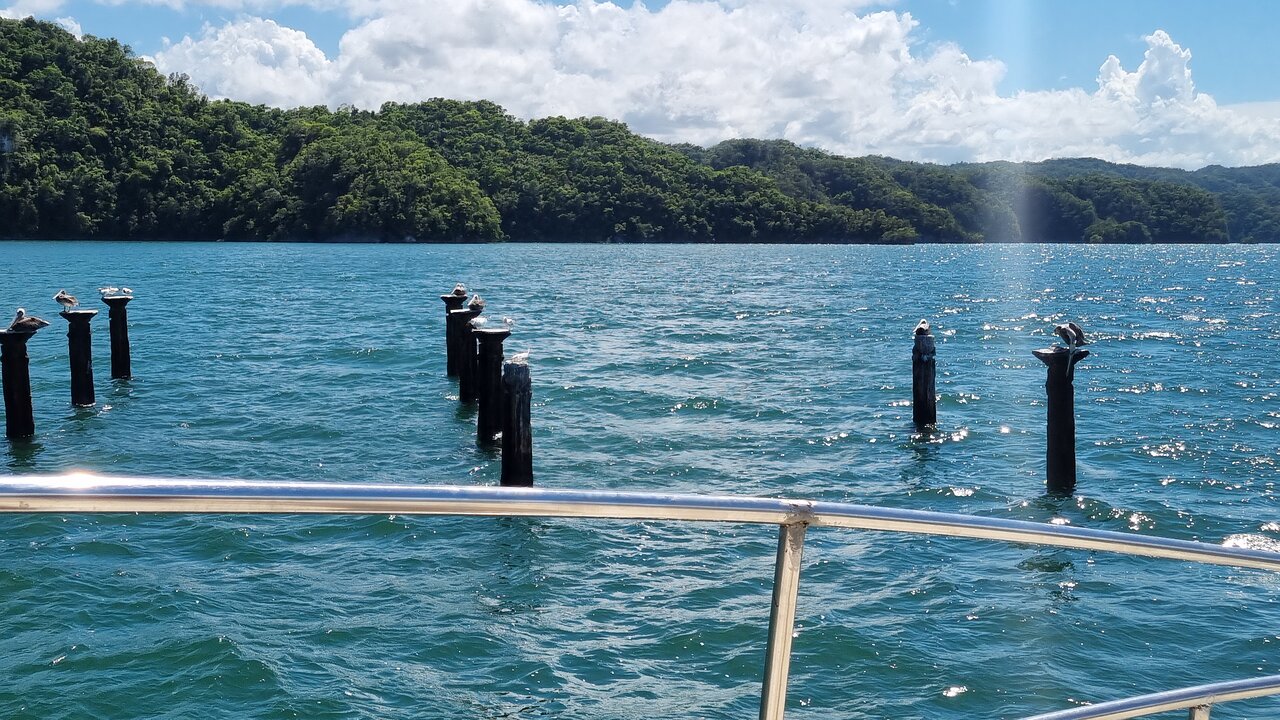
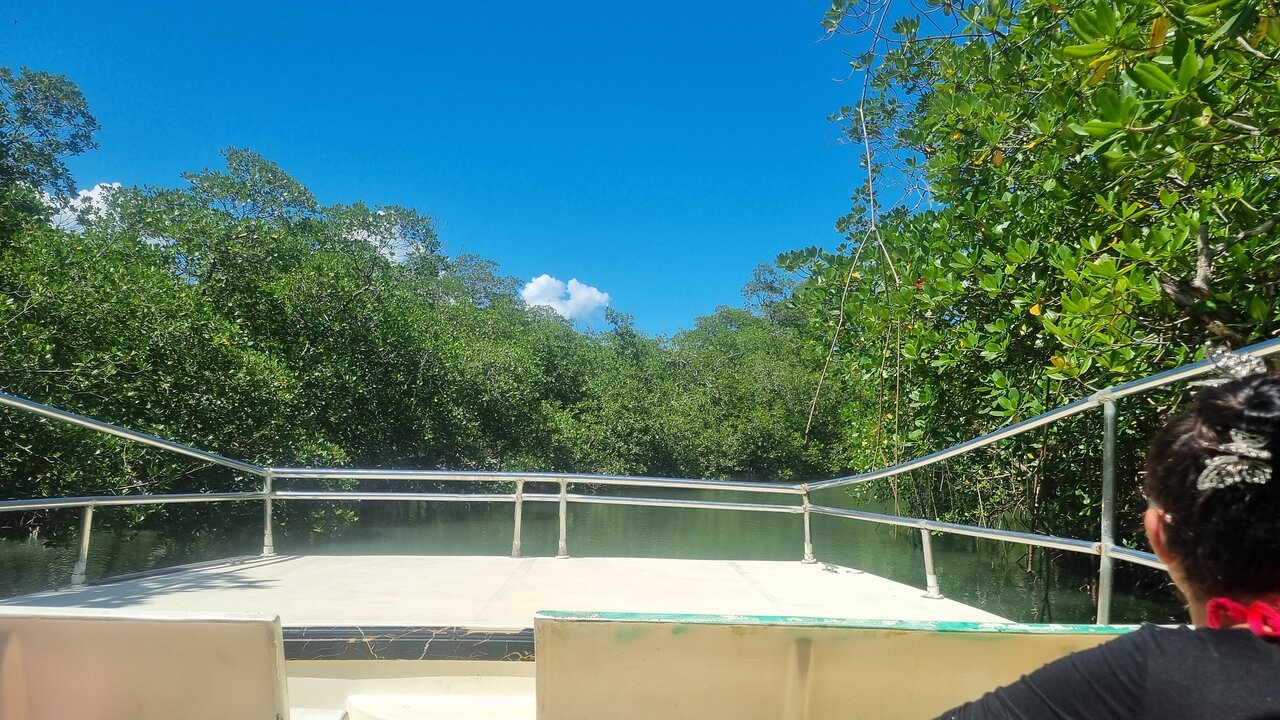
Los Haitises contains mangroves, coastal waterways, limestone islands and other wetland habitats. These environments form part of the broader coastal landscape around Samaná Bay.
Shorebirds generally use places where they can access suitable feeding areas. Depending on local conditions, these may include:
- Muddy shoreline edges
- Shallow coastal water
- Exposed sand or mud
- Wetland margins
- Sheltered coastal areas
Not every location in the park provides the same feeding conditions. Water depth, tides, sediment and vegetation can influence which birds use a particular area.
The park checklist confirms that a variety of shorebirds have been recorded in the area, but it should not be treated as a map of guaranteed viewing locations.
13. Responsible shorebird watching
Shorebirds may feed, rest or shelter in exposed areas where they can be vulnerable to disturbance.
A responsible visitor should:
- Keep a suitable distance from feeding and resting birds.
- Avoid chasing birds for photographs.
- Never feed wild birds.
- Avoid damaging mangrove roots and wetland vegetation.
- Follow the guide's instructions and park rules.
- Keep noise to a minimum.
- Avoid entering restricted or sensitive areas.
When birds repeatedly stop feeding, move away or take flight because people approach, the observation has become disruptive. The better approach is to watch quietly from a suitable distance.
14. Planning a birdwatching trip from Sabana de la Mar
Sabana de la Mar is an important community for visitors exploring the eastern side of Los Haitises. If shorebirds are a major interest, tell your tour provider before arranging the excursion.
A general sightseeing trip may not allow as much time for bird identification as a nature-focused outing.
Before booking, ask:
- What route does the excursion follow?
- Is there time for wildlife observation?
- Can the guide help identify birds?
- Are binoculars available, or should visitors bring their own?
- Are there current access restrictions affecting the route?
A knowledgeable guide can help explain the habitats and identify birds that are present, but no operator can guarantee a particular wild-bird sighting.
Frequently Asked Questions
1. What shorebirds are recorded in Los Haitises?
The park checklist includes plovers, sandpipers, yellowlegs, a whimbrel, Wilson's Snipe, Ruddy Turnstone and Black-necked Stilt, among other species.
2. Are sandpipers found in Los Haitises?
Yes. The checklist includes Least Sandpiper, Semipalmated Sandpiper, Western Sandpiper and Pectoral Sandpiper, among other sandpiper-related species.
3. What is the difference between a sandpiper and a plover?
Many sandpipers have narrow bills and search for food by picking or probing. Plovers often have shorter bills and use a run-stop-pick feeding technique. These are general patterns, not rules that identify every species.
4. Which shorebird is the smallest on the Los Haitises checklist?
The Least Sandpiper is particularly tiny and is one of the smallest shorebirds in the world.
5. How can I recognize a Black-necked Stilt?
Look for its extremely long, thin reddish legs, black-and-white body and slender bill.
6. Are shorebirds migratory in the Dominican Republic?
Many shorebirds that occur in the Dominican Republic migrate from northern breeding areas. Others have different movement patterns. Their presence can vary with the season.
7. Do shorebirds feed in mangroves?
Some shorebirds use mangrove edges and other wetland habitats, while others prefer exposed mudflats, shallow water or sandy shorelines. Habitat use varies by species and local conditions.
8. What equipment is useful for shorebird watching?
Binoculars are particularly useful. A camera with a zoom lens, a field guide, sun protection and drinking water can also make the experience more comfortable.
9. Can beginners identify shorebirds?
Yes, although some species are difficult to distinguish. Beginners should start with obvious features such as size, bill shape, leg color and feeding behavior. It is better to leave an uncertain bird unidentified than to guess.
10. Are shorebird sightings guaranteed on Los Haitises tours?
No. Birds are wild animals, and their presence depends on season, habitat conditions, water levels and natural movement. A tour may offer opportunities for wildlife observation, but sightings cannot be guaranteed.
Discover the smaller wildlife of Los Haitises
The shorebirds of Los Haitises reveal a different side of the park's natural diversity. From tiny Least Sandpipers to long-legged stilts and distinctive plovers, these birds show how wildlife adapts to the changing conditions of coastal wetlands.
For visitors exploring from Sabana de la Mar, looking carefully at the water's edge can turn an ordinary nature excursion into an opportunity to discover more about the park's ecology.
Plan your visit responsibly, ask about wildlife-observation opportunities and take time to appreciate the habitats that support these remarkable birds.
Local explorer & expert guide in Birding Dominican Republic.