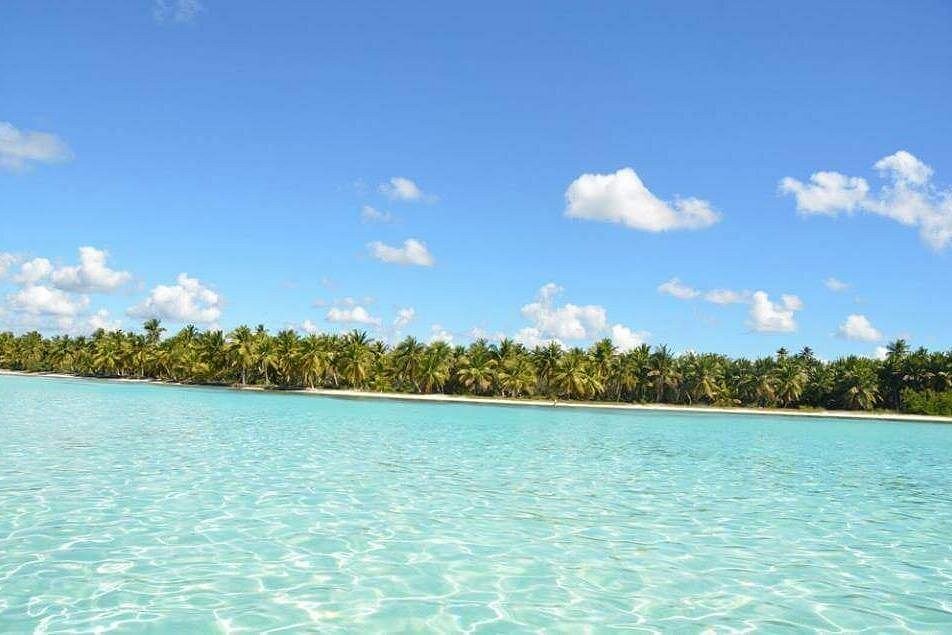
Saona Island Wave Energy: Ocean Waves, Renewable Electricity and Coastal Energy Systems
Introduction
The ocean is not only a source of food, transportation and tourism. It also contains renewable energy that can potentially be converted into electricity. One promising technology is wave energy conversion, which captures the movement of ocean waves and transforms mechanical energy into useful electrical power.
Saona Island, located off the southeastern coast of the Dominican Republic, provides an interesting geographical setting for discussing marine renewable energy. Its surrounding Caribbean waters make it relevant to research into coastal energy resources, although the actual suitability of any location for wave power generation must be established through measurements and engineering studies.
Wave energy technology uses specialised machines called Wave Energy Converters (WECs). Depending on their design, these devices may float on the ocean surface, operate below the water, use an oscillating air chamber or capture water in an elevated reservoir.
For civil, mechanical and coastal engineers, wave energy is an interdisciplinary subject involving hydrodynamics, structural design, electrical generation, marine construction and environmental assessment.
This article explains how wave energy works, the main types of converters, the engineering principles behind electricity generation and the research required to evaluate a possible wave-energy project around Saona Island.
1. What Is Ocean Wave Energy?
Ocean wave energy is the mechanical energy carried by moving surface waves.
Wind transfers energy to the ocean surface through friction and pressure differences. This interaction creates waves that travel across the water.
As waves move, water particles follow approximately orbital paths, although their motion changes with depth and water conditions. The moving water and the associated pressure variations contain energy that can be captured by specialised devices.
Wave energy converters transform part of this mechanical energy into electricity.
The basic conversion process is:
- Wind generates ocean waves.
- Waves transfer mechanical energy toward a converter.
- The converter moves, oscillates or captures water.
- A power take-off system converts mechanical or fluid energy into useful power.
- An electrical generator produces electricity.
- Power electronics condition the electricity for storage, local use or grid connection.
Wave energy is different from tidal energy. Tidal energy is associated with predictable changes in water level and tidal currents, while wave energy primarily captures the energy of surface-wave motion.
The two technologies may both be classified as marine renewable energy, but their physical energy sources and engineering systems are different.
2. How Much Energy Can Ocean Waves Carry?
The amount of energy available in waves depends on factors such as wave height, period, wavelength and water depth.
For an idealised regular wave, the average wave energy per unit horizontal surface area can be expressed approximately as:
E = ρgH² / 8
Where:
- E = average wave energy per unit surface area
- ρ = seawater density
- g = gravitational acceleration
- H = wave height
This expression represents the combined kinetic and potential energy of a linear, regular wave under the assumptions of the simplified theory.
Wave energy transport is also important. A converter does not simply capture the energy stored at one location; it interacts with waves as they pass through the device.
For deep-water irregular waves, the average power per metre of wave crest can be estimated using:
P ≈ ρg²Hₛ²Tₑ / 64π
Where:
- P = wave power per metre of wave crest
- Hₛ = significant wave height
- Tₑ = wave energy period
- ρ = seawater density
- g = gravitational acceleration
This simplified relationship is useful for preliminary resource calculations. Real coastal conditions may require more detailed spectral wave analysis, particularly in shallow water, where wave transformation and seabed interaction become important.
An important engineering point is that wave power is highly sensitive to wave height because significant wave height appears squared in the simplified expression.
A small error in estimating wave height can therefore produce a meaningful difference in calculated resource estimates.
3. What Is a Wave Energy Converter?
A Wave Energy Converter is a mechanical or electromechanical device that extracts energy from ocean waves.
There are several designs, each using a different physical mechanism.
The European Marine Energy Centre identifies several major technology families, including point absorbers, attenuators, oscillating wave surge converters, oscillating water columns, overtopping devices and submerged pressure-differential systems.
The main types are explained below.
3.1 Point Absorber
A point absorber is usually a floating device that moves in response to passing waves.
Many designs capture vertical movement, known as heave motion. The relative movement between a floating body and a reference structure drives a power take-off system.
The device may use:
- Hydraulic systems.
- Linear electrical generators.
- Mechanical transmission systems.
- Other direct-drive technologies.
Point absorbers are generally smaller than the wavelength of the waves they interact with.
Their compact form can make them suitable for modular development, although mooring, maintenance and survival during extreme sea conditions remain important design challenges.
3.2 Attenuator
An attenuator is a long, floating structure positioned approximately parallel to the direction of wave propagation.
As waves pass along the device, different sections move relative to one another. The movement at connected joints can drive hydraulic or other power conversion equipment.
Attenuators are designed to capture energy through the flexing and movement of their connected sections.
Their design requires careful consideration of structural fatigue, joint loading, mooring arrangements and extreme-wave conditions.
3.3 Oscillating Water Column
An Oscillating Water Column (OWC) uses the movement of water inside a partially submerged chamber.
The chamber contains a column of water with an air space above it.
When an incoming wave enters the chamber, the water level rises and compresses the air. When the water level falls, the air expands.
The moving air passes through a turbine connected to a generator.
A special turbine design may allow electricity generation during both air-flow directions.
OWC systems can be installed as standalone structures or incorporated into suitable coastal infrastructure, including breakwaters.
3.4 Oscillating Wave Surge Converter
An oscillating wave surge converter commonly uses a hinged plate or flap positioned in a suitable nearshore environment.
Horizontal water-particle movement associated with waves pushes the plate back and forth.
The resulting movement drives a hydraulic or mechanical system that operates a generator.
The device must be designed to withstand repeated loading, sediment interaction, corrosion and possible impacts from debris.
3.5 Overtopping Device
An overtopping converter captures water that passes over a ramp into an elevated reservoir.
The stored water then flows back toward the sea through a low-head turbine.
The turbine converts the water's potential energy into mechanical rotation, which drives an electrical generator.
This approach resembles a small hydroelectric system, except the reservoir is filled by incoming waves rather than by a river.
3.6 Submerged Pressure-Differential Device
Some wave-energy technologies operate beneath the water surface.
They respond to pressure variations produced by passing waves. The resulting movement of a flexible structure or other component drives a power take-off mechanism.
Submerged devices may reduce some conflicts with surface activities, but their underwater foundations, cables, maintenance requirements and structural performance need careful evaluation.
A 2025 review of submerged wave energy converters describes several different submerged technology families and discusses their potential advantages and engineering challenges.
4. Understanding the Power Take-Off System
The Power Take-Off (PTO) system is one of the most important components of a wave energy converter.
It transfers the mechanical or fluid movement produced by the waves into useful electrical energy.
Common PTO arrangements include:
Hydraulic PTO: Wave-driven motion operates hydraulic cylinders or pumps. Pressurised fluid then drives a hydraulic motor connected to a generator.
Mechanical PTO: Moving components transmit energy through gears, linkages or other mechanical systems.
Pneumatic PTO: Air movement in an oscillating water column drives an air turbine.
Direct-drive electrical PTO: The movement of a buoy or other component drives a linear electrical generator without requiring a conventional rotating transmission system.
The choice depends on device design, expected operating conditions, maintenance requirements, conversion efficiency and cost.
A successful converter must balance energy capture with mechanical reliability. A system that captures large amounts of energy but frequently fails may not be commercially attractive.
5. How Does a Wave Energy Converter Generate Electricity?
The energy conversion process can be understood through a simplified mechanical model.
Suppose a floating body moves vertically because of incoming waves.
The movement can be represented by displacement:
x(t)
The corresponding velocity is:
v(t) = dx/dt
If a power take-off system applies a force F(t) against the movement, the instantaneous mechanical power exchanged can be represented as:
P(t) = F(t) × v(t)
The average useful power depends on the interaction between the converter, wave conditions and control system.
Not all absorbed mechanical energy becomes electricity. Losses may occur through:
- Mechanical friction.
- Hydraulic leakage.
- Electrical resistance.
- Generator inefficiency.
- Power-electronic conversion.
- Auxiliary equipment consumption.
Therefore, electrical output must be calculated from the actual performance of the complete system rather than from wave resource estimates alone.
6. Wave Resource Assessment Around Saona Island
Before selecting a wave energy converter, engineers must determine whether the available wave resource is sufficient and suitable.
A feasibility study around Saona Island would need reliable environmental measurements.
Important parameters include:
Significant wave height
Significant wave height describes the average height of the highest one-third of waves in a wave record.
It is commonly used to characterise sea states and estimate available wave power.
Wave period
Wave period describes the time between successive wave crests passing a fixed location.
The energy period is particularly relevant when calculating wave energy transport.
Wave direction
Wave direction helps engineers determine how waves approach a potential installation site.
It also influences converter orientation, mooring design and possible sheltering by nearby landforms.
Seasonal variation
Wave conditions may change throughout the year.
A resource assessment should examine seasonal and longer-term variability rather than relying on one short observation period.
Extreme wave conditions
The converter must be designed not only for energy production but also for survival during severe sea conditions.
Historical observations, hindcast datasets, numerical modelling and field measurements can contribute to this assessment.
No specific wave-power density or commercially viable wave-energy resource should be assigned to Saona Island without a suitable local study.
7. The Role of Numerical Modelling
Numerical modelling helps engineers understand how wave energy converters interact with ocean waves before expensive construction or offshore testing.
Different modelling approaches may be used.
Linear potential-flow models
These models are often used during preliminary hydrodynamic analysis.
They can estimate wave forces, motions and energy absorption under simplified assumptions.
Boundary Element Methods
Boundary Element Methods are used in many wave-structure interaction problems to calculate hydrodynamic coefficients and radiation or diffraction effects.
Computational Fluid Dynamics
Computational Fluid Dynamics (CFD) can provide more detailed information about fluid movement, turbulence, pressure and flow around complex structures.
However, detailed CFD simulations can require substantial computational resources and careful validation.
Physical model testing
Laboratory wave flumes and wave basins allow researchers to test scaled devices under controlled wave conditions.
Physical experiments can help validate numerical models and investigate performance under different sea states.
A robust design process often combines analytical calculations, numerical modelling and experimental testing.
8. Mooring, Foundations and Structural Design
Wave energy converters operate in a demanding marine environment.
Their structural systems must resist repeated loading, corrosion, fatigue and extreme weather.
Mooring systems
Floating converters often require mooring systems to maintain their position.
Mooring design must consider:
- Wave forces.
- Wind forces.
- Currents.
- Device motion.
- Anchor capacity.
- Mooring-line fatigue.
- Seabed conditions.
Foundations
Fixed devices may require foundations connected to the seabed or suitable coastal structures.
Foundation design depends on soil properties, water depth, loading conditions and installation methods.
Structural materials
Materials must withstand marine exposure.
Common design considerations include:
- Chloride-related corrosion.
- Marine biofouling.
- Fatigue cracking.
- Abrasion.
- Impact loading.
- Protective coating performance.
Extreme conditions
A converter must have an appropriate strategy for severe sea states.
Possible strategies include controlled shutdown, mechanical locking, reduced exposure, submergence or other protective operating modes, depending on the device design.
Structural survivability is a major part of wave-energy project feasibility.
9. Connecting Wave Energy to Electricity Systems
Generating electricity offshore is only one part of the project.
The electricity must be delivered to a suitable user, stored or connected to an electrical distribution network.
A typical electrical system may include:
- Generator.
- Power conditioning equipment.
- Control system.
- Electrical protection.
- Subsea or coastal cable.
- Transformer or other connection equipment.
- Storage or local distribution where appropriate.
Wave converters may produce variable electrical output because ocean conditions continuously change.
Power electronics help regulate voltage and frequency and support electrical integration.
Battery storage may help manage short-term variation, although storage requirements depend on the intended application and overall energy system.
For a remote island application, engineers would need to compare local electricity demand, available grid infrastructure, alternative renewable resources and the cost of connecting marine equipment.
10. Potential Applications for Saona Island
Wave energy could be investigated as one possible component of a broader renewable-energy strategy around Saona Island.
However, feasibility would depend on measured wave conditions, environmental constraints, grid arrangements and project economics.
Potential applications to examine include:
Remote facility electricity
A suitable small-scale marine energy system might be investigated for supporting selected coastal facilities, subject to reliable energy production and maintenance access.
Hybrid renewable energy
Wave energy could theoretically be combined with solar generation, batteries and other suitable renewable systems.
A hybrid arrangement may reduce dependence on a single energy source, but the actual benefits must be demonstrated through resource and load modelling.
Research and education
A pilot-scale research programme could help universities study wave-structure interaction, marine electrical systems, hydrodynamics and environmental monitoring.
Coastal infrastructure integration
Some wave energy converters can be integrated with suitable breakwater structures.
Such designs may offer multiple functions, but the engineering and economic benefits depend on the specific location and structure.
These are potential applications for investigation, not claims that any wave-energy system is currently installed on Saona Island.
11. Environmental Considerations
Renewable energy does not mean that a project has no environmental impacts.
Wave energy installations can interact with marine ecosystems and coastal activities.
Environmental assessment should examine:
Underwater noise: Construction, machinery and operation may introduce sound into the marine environment.
Seabed disturbance: Anchors, foundations and cables may affect the seabed during installation and maintenance.
Marine wildlife: Mooring lines, moving components and underwater structures may create interaction risks that need to be assessed.
Habitat disturbance: The installation location should be evaluated for sensitive habitats and protected areas.
Navigation and fishing: Devices, moorings and cables may affect vessel routes and fishing activities.
Coastal processes: Shoreline-connected devices and breakwater modifications may alter local wave conditions and sediment movement.
A responsible project would require baseline ecological surveys, appropriate consultation, environmental approvals and a monitoring programme.
12. Economic and Technical Feasibility
The technical ability to generate electricity does not automatically make a wave-energy project economically viable.
Engineers and project developers must evaluate the full life cycle.
Important cost components include:
- Device manufacturing.
- Marine transportation.
- Installation vessels.
- Foundations and moorings.
- Electrical cables.
- Grid connection.
- Maintenance.
- Replacement components.
- Environmental monitoring.
- Decommissioning.
One useful economic measure is the Levelized Cost of Energy (LCOE).
It estimates the average cost of generating electricity over a project's lifetime, taking account of relevant costs and energy production.
A simplified conceptual expression is:
LCOE = Present value of lifetime costs / Present value of lifetime electricity generation
The calculation requires assumptions about project lifetime, discount rate, capital costs, operating costs and annual energy production.
For an island application, comparison with solar photovoltaic systems, wind power, diesel generation and energy storage would be essential.
Wave energy should be evaluated as one possible option rather than automatically assumed to be the cheapest or most appropriate technology.
13. A Proposed Wave Energy Feasibility Study for Saona Island
A future research project could follow a staged approach.
Stage 1 – Preliminary resource investigation
Collect available wave information, examine regional wave models and identify potential study locations.
Stage 2 – Field measurement
Deploy suitable wave-measurement equipment or use an appropriate validated measurement programme to record wave height, period and direction.
Stage 3 – Resource analysis
Calculate wave-power estimates, examine seasonal variability and assess extreme conditions.
Stage 4 – Technology selection
Compare point absorbers, oscillating water columns, attenuators and other converter types against local water depth, wave climate and installation conditions.
Stage 5 – Engineering design
Study hydrodynamic performance, foundations, mooring systems, corrosion protection, electrical equipment and structural survivability.
Stage 6 – Environmental assessment
Identify sensitive marine habitats, navigation requirements and potential effects on coastal communities and ecosystems.
Stage 7 – Economic comparison
Compare projected energy production and life-cycle costs with alternative energy technologies.
Stage 8 – Pilot evaluation
Only if earlier stages support feasibility should a carefully controlled pilot project be considered.
This framework is a research proposal. It does not establish that Saona Island has a measured commercial wave-energy resource or an existing wave-power installation.
14. The Future of Wave Energy Technology
Wave energy research continues to explore improved converter designs, more efficient power take-off systems and better control strategies.
Important research directions include:
- Improved hydrodynamic performance.
- More reliable mooring systems.
- Better protection against extreme waves.
- Lower-cost manufacturing.
- Improved power electronics.
- Advanced condition monitoring.
- Hybrid marine renewable-energy platforms.
- More accurate wave-to-wire simulation.
- Better environmental monitoring.
Recent reviews also examine how artificial intelligence and advanced control techniques may improve power capture and system operation.
However, commercial development still faces challenges involving reliability, installation cost, maintenance and long-term performance.
Frequently Asked Questions
1. What is wave energy?
Wave energy is renewable mechanical energy carried by ocean surface waves. Wave energy converters capture part of this energy and convert it into electricity.
2. What is a Wave Energy Converter?
A Wave Energy Converter is a device that uses wave motion, pressure changes or wave-driven water movement to operate an electrical generation system.
3. What are the main types of wave energy converters?
Major categories include point absorbers, attenuators, oscillating water columns, oscillating wave surge converters, overtopping devices and submerged pressure-differential systems.
4. Is wave energy the same as tidal energy?
No. Wave energy captures the motion of surface waves, while tidal energy uses the movement and changing water levels associated with astronomical tides.
5. Can wave energy generate electricity continuously?
No renewable resource should be assumed to provide constant output. Wave conditions change, so electrical generation varies. Storage and hybrid systems may help manage variability.
6. Can wave energy be used on Saona Island?
It is a possible subject for investigation, but its suitability cannot be confirmed without local wave measurements, engineering analysis, environmental assessment and economic evaluation.
7. What is the biggest challenge for wave energy converters?
Important challenges include reliable operation in harsh marine conditions, structural survival, maintenance access, installation costs and competitive electricity prices.
8. Can wave energy converters be combined with breakwaters?
Yes. Some technologies are designed for integration with suitable breakwaters or coastal structures. The structural, hydrodynamic and economic suitability must be evaluated for each site.
Conclusion
Ocean wave energy represents an interesting opportunity within the wider field of marine renewable energy. Through point absorbers, attenuators, oscillating water columns and other technologies, wave motion can be converted into mechanical and electrical power.
For Saona Island, the subject offers a potential research direction rather than a confirmed energy-development project. A reliable assessment would require long-term wave information, hydrodynamic modelling, structural design, environmental studies and comparison with other renewable-energy options.
The most important lesson is that successful wave energy engineering requires more than capturing moving water. It requires a complete system that can survive the marine environment, convert energy efficiently, connect to electrical infrastructure and operate responsibly.
The Caribbean ocean may offer opportunities for renewable-energy research, but careful measurements and engineering evidence must determine which technologies are truly suitable for each island.

Local explorer & expert guide in Birding Dominican Republic.


