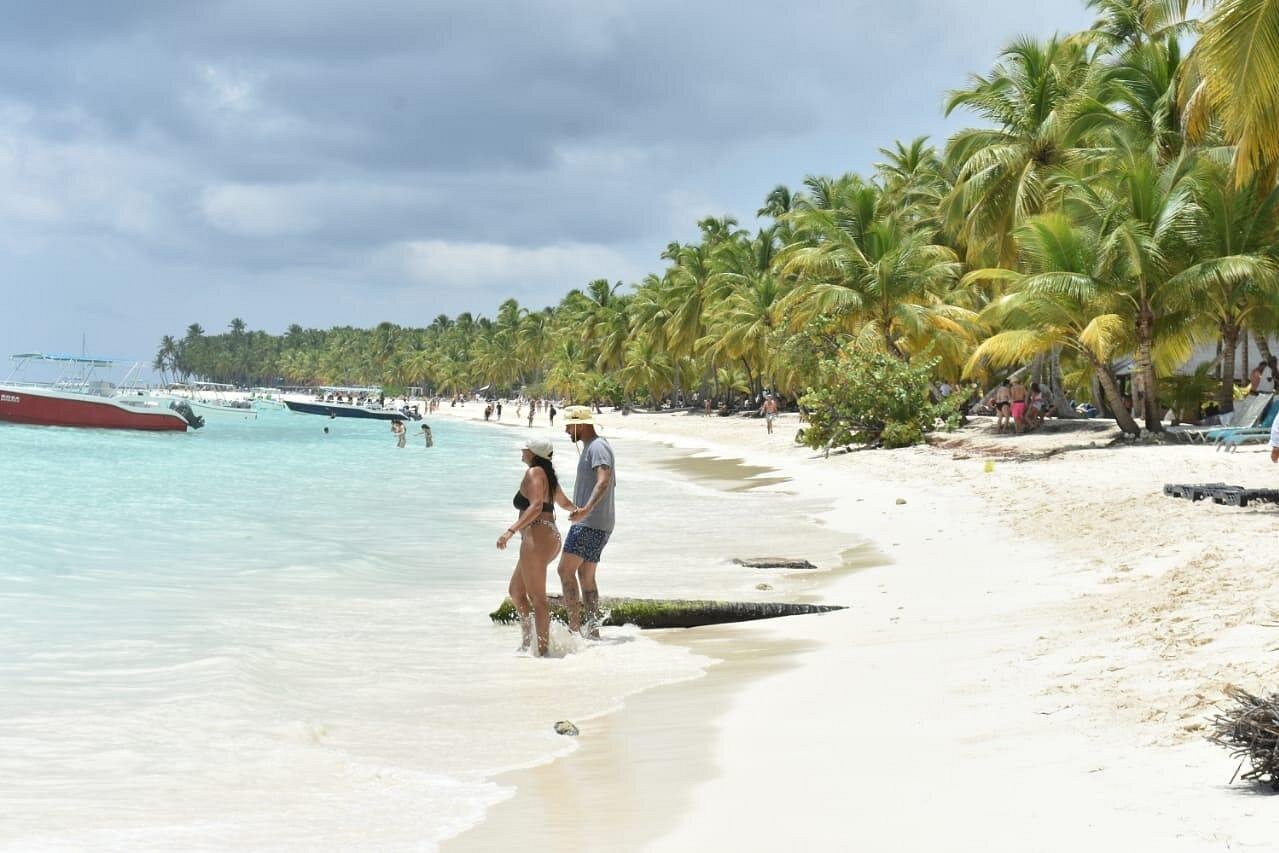
Saona Island Marine Heatwaves – Prolonged Ocean Warming, Ecosystem Stress & Caribbean Climate
The ocean can experience periods of unusually high temperatures just as the atmosphere experiences heatwaves. These events are called marine heatwaves, and they can influence coral reefs, seagrass meadows, marine animals and entire coastal ecosystems.
In tropical regions such as the Caribbean, unusually warm seawater can place additional pressure on marine habitats that already experience naturally warm conditions. When elevated temperatures persist, sensitive organisms may experience physiological stress, changes in growth and reproduction, or increased vulnerability to other environmental pressures.
Saona Island, located in the Dominican Republic's Caribbean region, provides an interesting setting for exploring the science of marine heatwaves. However, identifying a specific event or measuring its effects around the island requires reliable local ocean-temperature and ecological observations.
This guide explains what marine heatwaves are, how scientists identify them, why they occur and how they can affect tropical marine ecosystems.
1. What Is a Marine Heatwave?
A marine heatwave is a prolonged period when ocean temperatures are unusually high compared with the normal temperatures expected for that location and time of year.
Scientists commonly use a percentile-based definition developed by marine heatwave researchers. Under the widely used Hobday et al. framework, an event occurs when daily sea surface temperature exceeds the seasonally varying 90th-percentile threshold for at least five consecutive days.
This means that the water is warmer than approximately 90% of historical observations for the relevant time of year.
The threshold is location-specific. A temperature considered unusual in one ocean region may be normal in another.
Marine heatwaves can last:
- Several days
- Several weeks
- Multiple months
- In some cases, much longer periods
The duration and intensity of an event help determine its potential ecological significance.
2. Marine Heatwaves Versus Ordinary Warm Weather
A warm day at the beach does not automatically indicate a marine heatwave.
Atmospheric temperature and ocean temperature are related, but they are not identical. A sunny day can make the beach feel hot without producing a prolonged ocean-temperature anomaly.
A marine heatwave is identified using seawater temperature data and a historical seasonal reference.
For example, imagine that scientists have established the normal temperature range for a particular coastal area in a given month. If daily seawater temperatures remain above the defined high-temperature threshold for the required period, the conditions may qualify as a marine heatwave.
This distinction matters because marine organisms respond to the temperature of their surrounding water, not simply to how hot the air feels to visitors.
3. How Do Scientists Define a Marine Heatwave?
The widely used Hobday framework provides a consistent method for identifying marine heatwave events.
The process generally involves:
- Collecting daily sea surface temperature observations.
- Establishing a historical seasonal temperature reference.
- Calculating a high-temperature threshold, commonly the 90th percentile.
- Identifying periods when temperatures exceed that threshold.
- Checking whether the elevated temperature lasts for at least five consecutive days.
- Recording the event's beginning, ending, duration and intensity.
Researchers may also use additional rules for separating nearby events. This helps make comparisons between different datasets more consistent.
The definition is a scientific classification tool. It does not mean that every event causes the same level of ecological damage.
4. Important Characteristics of Marine Heatwaves
Scientists describe marine heatwaves using several measurements.
Duration
Duration is the number of days that an event continues.
A short event and a long event may produce different biological responses, even when their peak temperatures are similar.
Mean intensity
Mean intensity describes how far temperatures remain above the relevant climatological reference during the event.
Maximum intensity
Maximum intensity is the largest temperature anomaly reached during the event.
Cumulative intensity
Cumulative intensity combines the temperature anomaly and the duration of the event.
It is commonly expressed in degree-days. A prolonged moderate event can therefore have a substantial cumulative intensity even if its highest temperature is not exceptionally extreme.
Spatial extent
Spatial extent describes how much ocean area is affected.
A localized event may influence one coastal ecosystem, while a large event can affect multiple marine habitats and regions.
These measurements help scientists compare events and investigate their potential impacts.
5. What Causes Marine Heatwaves?
Marine heatwaves can develop through several interacting physical processes.
Persistent atmospheric conditions
A prolonged period of strong sunlight, weak winds or unusual atmospheric circulation can increase the amount of heat entering or remaining near the ocean surface.
Reduced ocean mixing
Wind and waves help mix surface water with deeper water. When mixing becomes weaker, heat may remain concentrated near the surface.
Ocean currents
Currents transport water masses and heat between different regions. Changes in circulation can contribute to unusually warm conditions in a particular area.
Weather and climate patterns
Large-scale climate variability can influence ocean temperature, wind and circulation.
Events associated with climate patterns such as El Niño can alter regional sea surface temperatures, although their effects differ across ocean basins.
Long-term ocean warming
Climate change is increasing the background temperature of the ocean. This can influence the likelihood, intensity and duration of marine heatwave conditions.
Marine heatwaves generally result from a combination of these processes rather than one universal cause.
6. How Marine Heatwaves Affect Coral Reefs
Coral reefs are among the marine ecosystems most vulnerable to prolonged thermal stress.
Many reef-building corals live in partnership with microscopic algae called symbionts. These algae provide much of the energy corals need through photosynthesis.
When seawater becomes unusually warm for long enough, this relationship can become stressed.
Corals may expel their symbiotic algae or lose their photosynthetic pigments. This process is known as coral bleaching.
Bleached corals are not necessarily dead. They may recover if environmental conditions improve before severe damage occurs.
However, prolonged or repeated thermal stress can reduce coral growth, reproduction and survival.
Marine heatwaves can therefore increase the risk of widespread bleaching, especially when elevated temperatures affect large areas of reef habitat.
7. Marine Heatwaves and Seagrass Meadows
Seagrass meadows are important coastal habitats that provide food, shelter and nursery areas for marine organisms.
Unusually high water temperatures can affect seagrass through several pathways:
- Changes in photosynthesis
- Increased respiratory demand
- Reduced growth under stressful conditions
- Changes in leaf development
- Greater vulnerability to disease or other environmental pressures
The response depends on the seagrass species, local water conditions and the duration of warming.
Some species may tolerate short periods of elevated temperature, while others can be more sensitive.
Healthy seagrass habitats also depend on suitable light, water quality, sediment conditions and nutrient balance. Temperature is only one part of the overall environmental picture.
8. Effects on Fish and Other Marine Animals
Marine heatwaves can influence fish, crustaceans, mollusks and other marine animals.
Many marine organisms are ectothermic, meaning their body temperature is strongly influenced by the surrounding environment.
Unusually warm water can affect:
- Metabolic rates
- Oxygen demand
- Growth and development
- Feeding behavior
- Reproductive timing
- Habitat suitability
- Movement and distribution
Some species may move toward cooler water when suitable habitat is available. Others may remain in their original habitats and experience physiological stress.
Marine heatwaves can also affect food availability. Changes in plankton communities or habitat condition may influence the organisms that fish and other animals depend on.
The ecological response varies widely among species and locations.
9. Marine Heatwaves and Ocean Oxygen
Warmer water generally holds less dissolved oxygen than cooler water at the same salinity and pressure.
This can create additional challenges for marine organisms, particularly when elevated temperatures occur alongside weak water circulation or strong biological oxygen consumption.
Warm conditions can also increase the metabolic oxygen demand of many organisms.
However, oxygen conditions are influenced by several processes, including:
- Photosynthesis
- Respiration
- Decomposition
- Water mixing
- Air-sea exchange
- Local circulation
A marine heatwave does not automatically produce low-oxygen conditions. Scientists need direct temperature and dissolved oxygen measurements to determine whether oxygen stress is occurring.
10. Marine Heatwaves and Harmful Algal Blooms
Marine heatwaves can alter environmental conditions that influence phytoplankton and other microscopic organisms.
Temperature interacts with sunlight, nutrients, water circulation and grazing pressure to influence plankton growth.
In some situations, warm conditions may contribute to an environment favorable to particular algal species. However, not every marine heatwave produces an algal bloom, and not every bloom is caused by elevated temperature.
Some harmful algal species can produce toxins or create ecological problems when their populations increase.
Scientists therefore monitor temperature alongside nutrient levels, plankton composition, chlorophyll and other water-quality indicators.
11. Marine Heatwaves in the Caribbean Region
The Caribbean contains diverse marine environments, including coral reefs, seagrass meadows, mangroves and open-water habitats.
Because many tropical marine species live within relatively warm temperature ranges, additional thermal stress can be important for ecosystem health.
NOAA has documented marine heatwave conditions in the broader Caribbean region and reported that the prolonged 2023 Atlantic and Caribbean warming contributed to a severe regional coral bleaching event.
Regional information provides important context, but it should not be treated as proof that every island or reef experienced identical temperatures or ecological impacts.
For Saona Island, determining the timing, strength and local effects of a marine heatwave would require suitable satellite temperature products, in-water measurements and ecological surveys.
12. How Do Scientists Monitor Marine Heatwaves?
Marine heatwave monitoring combines several observation methods.
Satellite observations
Satellites provide broad coverage of sea surface temperature.
They help scientists identify unusual temperature patterns and track the geographic extent of warm events.
Ocean buoys
Buoys measure ocean and atmospheric conditions. Depending on the instrument, they can record water temperature, wind, pressure and other variables.
Research vessels
Ships collect water samples and conduct measurements at selected locations.
Temperature loggers
Small instruments can be deployed underwater to record temperature over time. They are useful for examining conditions near coral reefs, seagrass beds and other coastal habitats.
Argo floats
Argo profiling floats measure temperature and salinity through the upper ocean and deeper water layers.
These observations help scientists understand whether warming is concentrated at the surface or extends below it.
Computer models
Ocean and climate models combine observations with physical equations to investigate the causes and possible development of marine heatwaves.
Using multiple data sources provides a more complete picture than relying on a single surface-temperature measurement.
13. Marine Heatwave Severity Categories
Some research frameworks classify marine heatwaves into four categories according to the intensity above the local threshold.
The commonly used categories are:
- Category I – Moderate
- Category II – Strong
- Category III – Severe
- Category IV – Extreme
The categories are based on multiples of the difference between the climatological mean and the 90th-percentile threshold.
They are not universal fixed temperature ranges. The actual temperature associated with each category depends on the local seasonal climate.
This approach helps researchers communicate the relative strength of events across different marine regions.
14. Marine Heatwaves Versus Ocean Heat Content
Marine heatwaves and ocean heat content are related, but they describe different aspects of ocean warming.
Ocean heat content measures the amount of heat stored in a volume or layer of ocean water.
A marine heatwave describes an unusually warm event relative to a seasonal temperature reference.
For example:
- Ocean heat content helps explain how much heat is stored below the surface.
- Marine heatwave metrics identify when sea temperatures become unusually high for a location and season.
- Sea surface temperature anomalies show how observed surface temperatures differ from a reference period.
Understanding both concepts helps scientists study ocean warming at different timescales and depths.
15. Can Marine Heatwaves Affect Tourism Around Saona Island?
Marine heatwaves are primarily an environmental and ecological issue, but they can also be relevant to coastal tourism.
Potential indirect effects may include changes in reef condition, marine biodiversity and the appearance of underwater habitats.
For snorkeling and diving destinations, coral bleaching or changes in marine life may influence the natural experience visitors encounter.
However, it is important not to assume that a marine heatwave is occurring at Saona Island simply because the Caribbean has experienced regional warming.
Visitors should follow local marine-park guidance and avoid touching, standing on or collecting coral and other marine organisms.
Responsible tourism helps reduce additional pressure on ecosystems that may already be experiencing environmental stress.
16. How Can Marine Heatwave Impacts Be Reduced?
Marine heatwaves cannot be prevented through local conservation actions alone. Their development is connected to large-scale ocean and climate processes.
Nevertheless, reducing additional ecosystem pressures can improve the ability of marine habitats to withstand and recover from stress.
Useful actions include:
Protecting coral reef habitats
Responsible boating, careful snorkeling and effective management of marine protected areas can reduce direct physical damage.
Maintaining healthy seagrass meadows
Avoiding unnecessary anchoring, sediment disturbance and pollution helps preserve important coastal habitats.
Reducing pollution
Wastewater, plastic debris and excess nutrients can create additional environmental stress.
Monitoring ecosystem condition
Regular surveys of coral cover, bleaching, seagrass health and water quality can help identify changes.
Supporting climate action
Reducing greenhouse gas emissions is essential for limiting long-term ocean warming and the growing risk of extreme marine temperature events.
17. The Future of Marine Heatwave Research
Scientists are improving their ability to detect, explain and forecast marine heatwaves.
Future research priorities include:
- Better coastal temperature measurements
- Improved satellite observation systems
- More accurate ocean circulation models
- Understanding species-specific thermal limits
- Monitoring repeated heat exposure
- Studying the combined effects of heat and low oxygen
- Improving coral heat-stress forecasts
- Assessing ecosystem recovery after extreme warming
For tropical islands such as Saona Island, combining satellite observations with local underwater temperature sensors and biological surveys could provide valuable information about coastal ecosystem vulnerability.
Frequently Asked Questions
1. What is a marine heatwave?
A marine heatwave is a prolonged period of unusually warm seawater compared with the normal seasonal temperature for a location.
2. How many days are needed to identify a marine heatwave?
The widely used Hobday definition identifies an event when sea surface temperature exceeds the seasonal 90th-percentile threshold for at least five consecutive days.
3. Can marine heatwaves happen in the Caribbean?
Yes. The Caribbean has experienced marine heatwave conditions, including during the prolonged 2023 Atlantic and Caribbean warming event.
4. How do marine heatwaves affect coral reefs?
Prolonged thermal stress can cause coral bleaching, reduce coral growth and increase the risk of coral mortality if stressful conditions persist.
5. Do marine heatwaves affect seagrass?
Yes. Elevated temperatures can affect photosynthesis, respiration, growth and survival, depending on the species and environmental conditions.
6. Are marine heatwaves the same as ocean warming?
No. Long-term ocean warming describes a broader trend, while marine heatwaves are distinct periods of unusually high temperatures relative to a seasonal reference.
7. How are marine heatwaves measured?
Scientists use satellite observations, buoys, underwater temperature loggers, research vessels, Argo floats and ocean models.
8. Are all marine heatwaves equally dangerous?
No. Their ecological effects depend on intensity, duration, spatial extent, affected species and other environmental pressures.
9. Does Saona Island currently have a marine heatwave?
This article does not establish current local conditions. A reliable answer requires up-to-date temperature observations and analysis using a defined marine heatwave threshold.
10. Can marine ecosystems recover after a heatwave?
Some ecosystems and organisms can recover when temperatures return to suitable conditions. Recovery depends on the severity and duration of stress, habitat condition and the presence of additional pressures.
Conclusion: Understanding Unusual Ocean Warming Around Saona Island
Marine heatwaves are important ocean events that can affect coral reefs, seagrass meadows, fish and other marine organisms. Their ecological effects depend on how warm the water becomes, how long the event lasts and how much ocean area is affected.
Scientific measurements of duration, intensity, cumulative intensity and spatial extent allow researchers to compare these events and understand their consequences.
For Saona Island, marine heatwave science provides a useful way to explore the relationship between tropical ocean temperatures and ecosystem health. Reliable local monitoring is essential before drawing conclusions about specific events or impacts around the island.
Protecting marine habitats, reducing pollution and supporting climate action can help strengthen the resilience of Caribbean coastal ecosystems in a warming world.

Local explorer & expert guide in Birding Dominican Republic.


