Saona Island Air–Sea Gas Exchange: How the Ocean Trades Carbon Dioxide, Oxygen and Other Gases with the Atmosphere
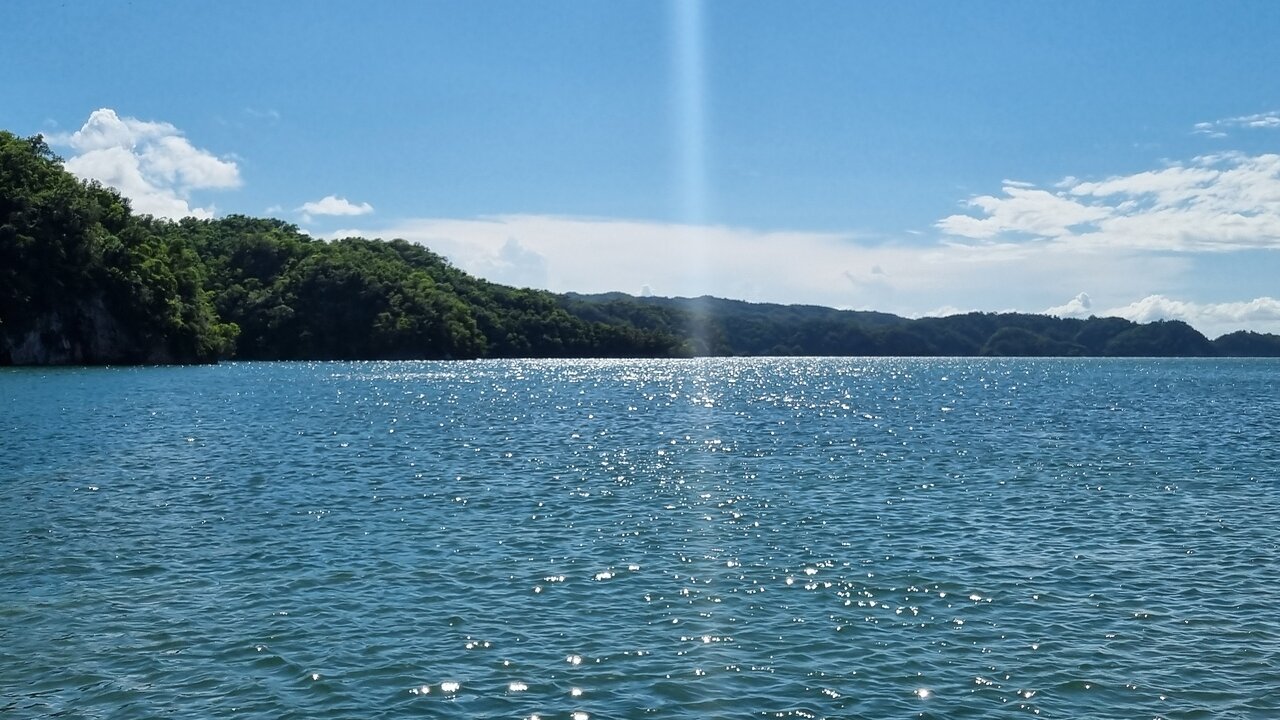
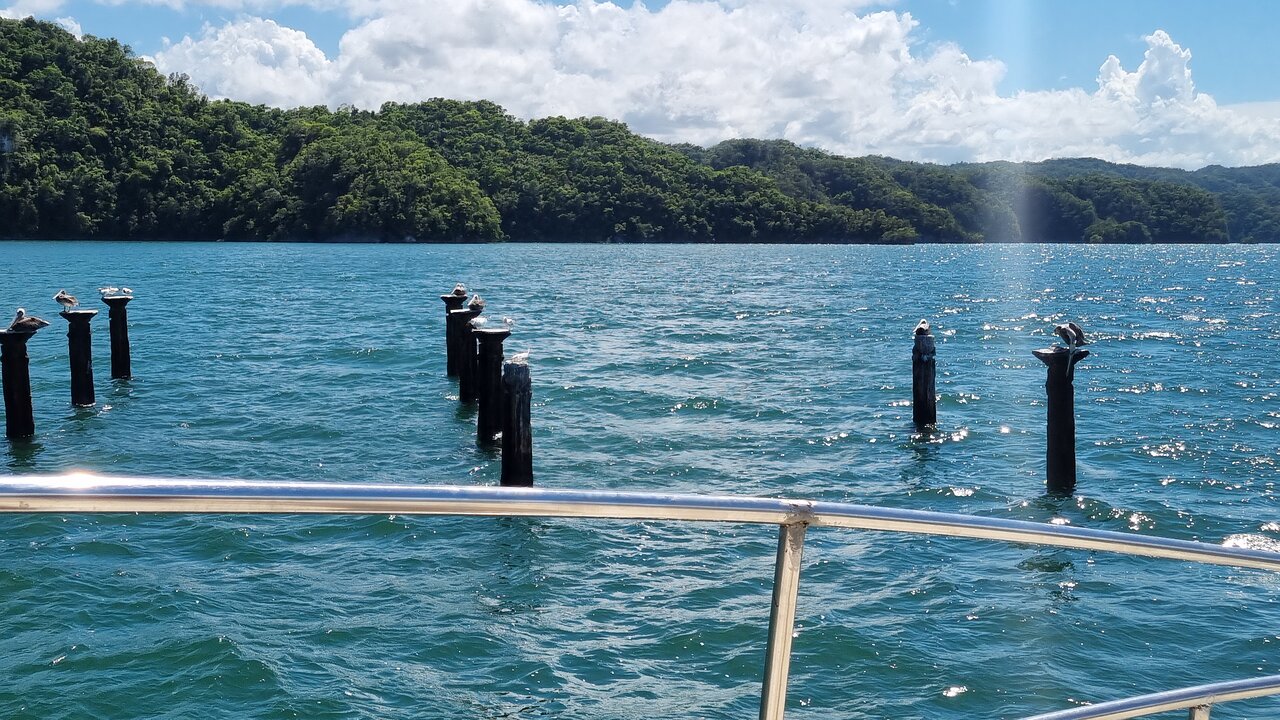
The Caribbean Sea around Saona Island is part of a constantly changing exchange system between the ocean and the atmosphere. Although the sea surface may look like a simple boundary separating water from air, it is actually an active zone where gases move in both directions.
This process is called air–sea gas exchange.
Through this exchange, the ocean can absorb atmospheric carbon dioxide, release oxygen produced by marine photosynthesis, take up oxygen from the atmosphere or release other dissolved gases. The direction and speed of transfer depend on gas concentrations, temperature, wind, waves, bubbles and the physical properties of seawater.
Air–sea gas exchange is important for climate regulation, marine chemistry and the functioning of ocean ecosystems. Understanding it provides another way to explore the science of the Caribbean Sea surrounding Saona Island.
1. What Is Air–Sea Gas Exchange?
Air–sea gas exchange is the movement of gases across the boundary between the atmosphere and ocean.
The exchange can occur in either direction:
- Atmosphere to ocean: A gas moves from the air into seawater.
- Ocean to atmosphere: A dissolved gas moves out of seawater and enters the air.
The direction depends mainly on the difference in the gas's chemical potential or effective concentration between the two environments.
For example, when the surface ocean has a higher carbon dioxide partial pressure than the overlying atmosphere, carbon dioxide tends to move from the ocean into the air. When the atmospheric partial pressure is higher, the ocean tends to absorb carbon dioxide.
This exchange is not limited to carbon dioxide. It also involves oxygen, nitrogen, argon, methane, nitrous oxide and other gases.
The ocean surface is therefore an important boundary in Earth's climate and biogeochemical systems.
2. Which Gases Are Exchanged Between the Ocean and Atmosphere?
Several gases participate in air–sea exchange.
Carbon dioxide (CO₂)
Carbon dioxide is one of the most important gases for climate research.
It dissolves in seawater and participates in a series of chemical reactions involving dissolved carbon dioxide, carbonic acid, bicarbonate and carbonate ions.
The ocean absorbs a substantial fraction of human-caused carbon dioxide emissions, influencing atmospheric carbon dioxide concentrations and seawater chemistry.
Oxygen (O₂)
Oxygen moves between the atmosphere and ocean.
When surface seawater is undersaturated relative to atmospheric equilibrium, oxygen can enter the ocean. When it is supersaturated, oxygen can escape into the atmosphere.
Photosynthesis and respiration also strongly influence dissolved oxygen levels within marine environments.
Nitrogen (N₂)
Nitrogen gas is abundant in the atmosphere and can dissolve in seawater.
It is involved in physical gas exchange and biological processes, although molecular nitrogen is not directly usable by most organisms without nitrogen fixation.
Argon (Ar)
Argon is a chemically inert gas that is useful in oceanographic research.
Its solubility and exchange behavior help scientists investigate physical processes such as bubble-mediated gas transfer and water-mass formation.
Methane (CH₄) and nitrous oxide (N₂O)
These gases are important because of their roles in climate chemistry.
Depending on local concentrations and environmental conditions, the ocean can act as a source or sink for them.
Their exchange is particularly relevant in studies of coastal wetlands, sediments, oxygen conditions and marine biogeochemistry.
3. Why Do Gases Move Across the Ocean Surface?
Gas exchange is driven by differences between the gas conditions in the atmosphere and the surface water.
A simplified explanation is that gas molecules tend to move from a region of higher effective gas concentration toward a region of lower effective concentration.
For carbon dioxide, scientists commonly compare the partial pressure of CO₂ in surface seawater with that in the atmosphere.
If seawater has a higher CO₂ partial pressure, it generally releases carbon dioxide. If the atmosphere has a higher partial pressure, the surface ocean generally absorbs it.
This is why the ocean can absorb carbon dioxide in some regions and release it in others.
The direction can also change over time as temperature, biological activity and circulation alter surface-water chemistry.
4. What Is Gas Transfer Velocity?
Gas transfer velocity describes how efficiently a gas crosses the air–water interface.
It is commonly represented by the symbol k.
A simplified expression for gas flux is:
F = k × ΔC
Where:
- F = gas transfer flux
- k = gas transfer velocity
- ΔC = difference in gas concentration across the relevant boundary or relative to equilibrium
For carbon dioxide, flux is also commonly expressed using a partial-pressure difference:
FCO₂ = k × ΔpCO₂
Where ΔpCO₂ is the difference between the partial pressure of CO₂ in surface seawater and the atmosphere.
The sign convention depends on how the difference is defined. A positive or negative value can therefore represent different directions in different datasets.
The important idea is that gas flux depends on both the driving difference and the efficiency of transfer.
A large concentration or partial-pressure difference does not automatically produce a large flux if transfer across the interface is slow.
Likewise, a high transfer velocity may produce only a modest flux if the gas difference is small.
5. How Does Wind Influence Gas Exchange?
Wind is one of the major physical controls on air–sea gas transfer.
As wind moves across the ocean surface, it transfers momentum into the water.
This creates surface shear, turbulence and waves. These processes renew the thin water layer near the surface and can make it easier for gases to cross the interface.
In general, stronger wind conditions often increase gas transfer velocity.
However, the relationship is not determined by wind speed alone.
Wave conditions, wind history, surface films, turbulence and the presence of breaking waves can all influence gas exchange.
Researchers therefore use wind-speed-based equations as practical approximations, while continuing to investigate more complete descriptions of ocean surface processes.
6. How Do Breaking Waves and Bubbles Help Gas Exchange?
Breaking waves provide an additional pathway for gas transfer.
When a wave breaks, it can trap air inside the water and produce underwater bubbles.
These bubbles have surfaces that allow gases to move between the trapped air and surrounding seawater.
As a bubble rises, shrinks, expands or dissolves, its gas content can change.
This creates a bubble-mediated exchange pathway in addition to direct transfer across the unbroken sea surface.
Bubbles can influence the exchange of gases such as oxygen, nitrogen, carbon dioxide and other compounds.
The importance of bubble transfer depends on factors including:
- Wind speed
- Wave-breaking intensity
- Bubble size
- Bubble depth
- Gas solubility
- Bubble lifetime
- Water turbulence
A 2026 review in Reviews of Geophysics highlights that bubbles can substantially influence air–sea gas exchange, particularly for gases with relatively low solubility. It also emphasizes that bubble effects vary with gas properties and sea conditions.
7. What Is the Schmidt Number?
The Schmidt number is a dimensionless number used in fluid mechanics and gas-transfer research.
It compares the rate of momentum diffusion with the rate of molecular diffusion.
For a gas in seawater, it can be written as:
Sc = ν / D
Where:
- Sc = Schmidt number
- ν = kinematic viscosity of seawater
- D = molecular diffusivity of the gas in seawater
A higher Schmidt number indicates that molecular diffusion is relatively slow compared with momentum diffusion.
The Schmidt number matters because gases do not all diffuse through seawater at the same rate.
It is also temperature-dependent, so gas-transfer studies often normalize measurements to a reference Schmidt number to make comparisons more consistent.
This is particularly useful when comparing measurements made in different seasons or at different water temperatures.
8. Why Does Water Temperature Matter?
Temperature affects gas exchange in several ways.
First, it changes gas solubility. For many gases, warmer seawater holds less gas at equilibrium with the same atmospheric conditions than cooler seawater.
Second, temperature influences molecular diffusivity and the physical properties of seawater.
Third, it affects biological processes that change dissolved gas concentrations.
For example, photosynthesis and respiration influence oxygen and carbon dioxide in surface water, while temperature can influence their rates.
Therefore, gas exchange cannot be explained by wind alone. Temperature and seawater chemistry must also be considered.
9. The Ocean as a Carbon Dioxide Sink and Source
The ocean plays a major role in the global carbon cycle.
When atmospheric carbon dioxide enters surface seawater, it participates in seawater carbonate chemistry.
Some dissolved carbon dioxide remains in its dissolved form, while much of it is converted into bicarbonate and carbonate ions through chemical reactions.
This allows seawater to store large quantities of inorganic carbon.
However, the ocean is not a uniform carbon sink.
Some regions absorb atmospheric CO₂, while others release it. The balance depends on physical conditions, biological activity, circulation and seawater chemistry.
NOAA's ocean carbon research describes air–sea CO₂ exchange as a process controlled by the difference in carbon dioxide partial pressure and the efficiency of gas transfer.
The exchange between atmosphere and ocean is therefore essential to understanding climate change.
10. How Does Photosynthesis Influence Air–Sea Gas Exchange?
Marine photosynthesis changes the chemical conditions of surface seawater.
Phytoplankton use sunlight, water and dissolved inorganic carbon to produce organic matter and release oxygen.
When photosynthesis reduces dissolved CO₂ in surface water, it can lower surface-water CO₂ partial pressure relative to the atmosphere.
This may encourage atmospheric carbon dioxide to enter the ocean.
Respiration and decomposition have the opposite general effect on dissolved inorganic carbon and oxygen.
These biological processes interact with physical gas exchange.
It is important to distinguish two processes:
- Photosynthesis and respiration change gas concentrations within the water.
- Air–sea gas exchange moves gases across the ocean surface.
Both can operate simultaneously.
11. Why Does Gas Exchange Matter for Ocean Oxygen?
Oxygen exchange at the sea surface helps connect atmospheric oxygen with the ocean.
However, oxygen conditions within the water column also depend on photosynthesis, respiration, decomposition, mixing and circulation.
For example, surface waters can receive oxygen from the atmosphere while deeper water may experience oxygen consumption through biological respiration.
Gas exchange is therefore one part of the wider oxygen budget.
It is especially important in understanding how oxygen enters surface waters and how surface conditions influence the oxygen available for transport into deeper layers.
This article focuses on the exchange process itself rather than the concentration patterns and ecological effects discussed in marine dissolved-oxygen research.
12. What Is the Ocean Surface Microlayer?
The ocean surface is not always a perfectly clean boundary between air and water.
The uppermost thin layer of seawater, often called the sea-surface microlayer, can contain organic material, microorganisms, surfactants and other substances.
These materials may influence surface tension and the physical behavior of the interface.
Some surface-active compounds can suppress small waves and change the efficiency of gas transfer.
The microlayer can also be disturbed by breaking waves, bubbles and surface turbulence.
This makes the sea surface an active chemical and physical environment rather than a simple flat boundary.
13. How Do Scientists Measure Air–Sea Gas Exchange?
Directly measuring gas transfer is challenging because the exchange occurs over a constantly moving surface.
Scientists use several approaches.
Surface-water and atmospheric gas measurements
Research vessels can measure gas concentrations or partial pressures in seawater and air.
These measurements help establish the driving difference across the interface.
Eddy covariance
Eddy covariance systems measure rapid fluctuations in vertical wind velocity and gas concentration above the ocean.
By analyzing the covariance between these fluctuations, scientists can estimate the vertical gas flux.
Tracer experiments
Researchers sometimes release or track suitable tracer gases to investigate transfer rates.
Some tracer methods are especially useful for estimating gas-transfer velocity under controlled or field conditions.
Floating chambers
A floating chamber can be placed over a small area of water to investigate gas accumulation or loss.
However, chamber measurements may disturb the natural surface conditions and require careful interpretation.
Bubble measurements
Specialized underwater instruments and imaging systems can help scientists measure bubble size distributions and bubble behavior.
These observations help improve estimates of bubble-mediated gas exchange.
Oceanographic models
Numerical models combine wind, waves, gas properties, water chemistry and other observations to estimate regional and global gas fluxes.
Using several methods together improves understanding of the exchange process.
14. Why Is Air–Sea Gas Exchange Important in the Caribbean Sea?
The Caribbean Sea is part of the tropical Atlantic system, where air–sea exchange influences carbon cycling, oxygen transfer and regional marine chemistry.
Its gas-exchange conditions can vary with:
- Seasonal wind patterns
- Sea-surface temperature
- Wave conditions
- Biological productivity
- Ocean circulation
- Surface-water chemistry
- Coastal and offshore environments
Coastal and open-ocean conditions may differ because water depth, waves, biological activity and local circulation are not uniform.
For Saona Island, air–sea gas exchange provides a useful scientific framework for understanding how the surrounding ocean interacts with the atmosphere.
However, the actual direction and magnitude of gas flux at a particular beach or offshore location cannot be established from general regional information alone. It requires measurements of the relevant gas differences and transfer conditions.
15. How Can Climate Change Affect Air–Sea Gas Exchange?
Climate change can influence the exchange of gases between the ocean and atmosphere.
Several processes are important.
Ocean warming: Warmer water changes gas solubility and can alter the amount of gas that seawater holds at equilibrium.
Changing wind patterns: Changes in wind can influence surface turbulence, waves and gas-transfer velocity.
Changing wave conditions: Wave breaking and bubble production can affect gas exchange, although the response varies with sea state.
Increasing atmospheric CO₂: Rising atmospheric carbon dioxide changes the chemical driving difference between air and surface seawater.
Ocean acidification: Increased carbon uptake changes seawater carbonate chemistry and affects marine organisms that build calcium carbonate structures.
The overall result depends on the gas being studied and the physical and chemical conditions of each region.
16. Why Does This Process Matter for Saona Island Conservation?
The sea around Saona Island is part of a larger marine environment that exchanges matter and energy with the atmosphere.
Air–sea gas exchange helps regulate the movement of carbon dioxide and oxygen and supports the chemistry of the wider marine system.
Understanding this process can contribute to research on:
- Ocean carbon uptake
- Marine oxygen cycling
- Coastal water chemistry
- Climate-related ocean changes
- Surface-wave and wind interactions
- Marine ecosystem monitoring
Conservation efforts should also reduce direct pressures on coastal habitats.
Responsible boating, preventing litter, reducing pollution and protecting sensitive marine environments all help maintain healthier coastal ecosystems.
17. What Can Visitors Learn from Air–Sea Gas Exchange?
Visitors to Saona Island may see waves, bubbles and sea spray without realizing that these visible features are connected to gas transfer.
Every breaking wave can create bubbles, while wind-driven motion continually renews the water near the ocean surface.
Although the actual gas flux is invisible, it contributes to the relationship between the Caribbean Sea and the atmosphere.
Learning about this process helps visitors understand that the ocean is not isolated from the air above it.
The sea and atmosphere form a connected system in which gases, energy and other materials are continuously exchanged.
Frequently Asked Questions
1. What is air–sea gas exchange?
It is the movement of gases such as carbon dioxide and oxygen between the atmosphere and ocean.
2. Does the ocean absorb carbon dioxide?
Yes. The ocean absorbs a substantial fraction of human-caused carbon dioxide emissions, although some ocean regions also release CO₂ into the atmosphere.
3. Does oxygen enter the ocean from the air?
Yes. Atmospheric oxygen can dissolve into surface seawater, particularly when the water is undersaturated relative to atmospheric equilibrium.
4. How does wind affect gas exchange?
Wind creates surface shear, turbulence and waves, which can increase the rate at which gases cross the ocean surface.
5. Do breaking waves increase gas exchange?
They can. Breaking waves introduce air bubbles into seawater, creating an additional pathway for gas transfer.
6. What is gas transfer velocity?
It is a measure of how efficiently a gas moves across the air–water interface.
7. What is the Schmidt number?
It is a dimensionless number comparing momentum diffusion with molecular diffusion. It helps scientists account for differences in gas diffusivity.
8. Is air–sea gas exchange the same as dissolved oxygen?
No. Dissolved oxygen describes oxygen present in seawater, while air–sea gas exchange describes the movement of oxygen across the sea surface.
9. Can the Caribbean Sea release carbon dioxide?
Yes. Whether a particular location absorbs or releases CO₂ depends on the difference between atmospheric and seawater carbon dioxide partial pressures and the efficiency of transfer.
10. Has gas exchange been measured specifically around Saona Island?
This article does not claim a particular local gas flux. Establishing one would require verified measurements of surface-water and atmospheric gas conditions, along with suitable transfer estimates.
Conclusion: The Invisible Exchange Between Saona Island and the Atmosphere
Air–sea gas exchange is an essential connection between the ocean and atmosphere.
Through direct molecular transfer and bubble-mediated pathways, gases move across the sea surface. Wind, waves, temperature, gas solubility and chemical gradients influence how quickly this exchange occurs.
The process helps regulate carbon dioxide and oxygen movement, contributes to ocean chemistry and plays an important role in the global climate system.
Although visitors cannot see individual gas molecules moving between the Caribbean Sea and the atmosphere, the exchange is happening continuously.
Understanding it reveals another important layer of ocean science beneath the beautiful surface waters of Saona Island.

Local explorer & expert guide in Birding Dominican Republic.