Purple Gallinule in Los Haitises: A Colorful Bird of Tropical Wetlands
The wetlands of Los Haitises National Park are home to many fascinating birds, from coastal species that search for food along the water to forest birds that remain hidden among the trees. One particularly striking member of the park's recorded birdlife is the Purple Gallinule (Porphyrio martinica).
With its vivid purple-blue body, greenish back, bright red bill, and long yellow legs, this bird is difficult to confuse with most other wetland species. Its appearance is impressive, but its behavior is just as interesting. It walks through marsh vegetation, searches for seeds and small animals, and uses its long toes to move across aquatic plants.
For visitors interested in the wildlife of Los Haitises National Park, learning about the Purple Gallinule offers another reason to appreciate the area's freshwater wetlands and diverse habitats.
Is the Purple Gallinule Found in Los Haitises National Park?
Yes. The Purple Gallinule is included in the available bird checklist for Los Haitises National Park. Its scientific name is Porphyrio martinica, and it belongs to the rail family, Rallidae.
The checklist is useful evidence that the species is part of the park's recorded birdlife. However, a checklist entry should not be interpreted as a guarantee that visitors will see the bird during a particular excursion. Wildlife sightings depend on habitat conditions, season, water levels, bird activity, and the specific locations visited.
The Purple Gallinule is generally associated with freshwater wetlands containing aquatic plants. This makes marshes, ponds, and vegetated wetland edges more relevant places to understand its ecology than assuming that every mangrove channel is suitable habitat.
How to Identify a Purple Gallinule
The adult Purple Gallinule is among the most colorful members of the rail family. Its combination of blue, purple, green, red, and yellow creates a distinctive appearance.
Here are some of its most recognizable features:
1. Purple-blue head and body
The head, neck, breast, and much of the underside are deep violet-blue or purple-blue. Depending on lighting conditions, the feathers can appear darker or more intensely colored.
2. Greenish back and wings
The upperparts have green, bronze, and blue-green tones. These colors contrast with the darker purple-blue feathers on the front of the body.
3. Red bill with a yellow tip
One of the easiest features to notice is the bright red bill, which usually has a yellow tip. Above the bill is a pale blue frontal shield on the forehead.
4. Long yellow legs and toes
The bird has long legs and unusually long toes for its body size. These help it move through shallow water and across aquatic vegetation.
5. White feathers beneath the tail
The undertail area has noticeable white feathers. These can become visible when the bird raises or flicks its tail.
Male and female adults look very similar, so identifying their sex by appearance alone is difficult. Immature birds are generally much duller, with brownish and olive-colored plumage.
Why Does the Purple Gallinule Have Such Long Toes?
The Purple Gallinule's feet are especially interesting because they help it move through wetland environments where ordinary walking can be difficult.
Its long toes spread its weight over a larger surface. This can help the bird step across floating leaves and aquatic vegetation without sinking as easily as it might with shorter feet.
The species is often associated with water lilies and other floating plants. It can walk carefully across vegetation while searching for food, sometimes stretching its body or using its wings to maintain balance.
This ability is useful in wetlands where plants form a loose surface over shallow water. However, the Purple Gallinule is not restricted to floating leaves. It also walks through marsh edges, wades in shallow water, climbs among vegetation, and swims.
Its feet are therefore more than a visual feature: they are an important adaptation to life in vegetated wetlands.
Where Does the Purple Gallinule Live?
The Purple Gallinule is found across parts of the Americas, including the Caribbean, Central America, and South America. It also occurs in parts of the southeastern United States.
Its preferred habitat is generally freshwater wetland environments with abundant vegetation.
Typical habitats include:
- Freshwater marshes
- Shallow ponds
- Wetland edges
- Swamps with aquatic plants
- Areas containing water lilies and other floating vegetation
- Wet agricultural fields where suitable cover and food are available
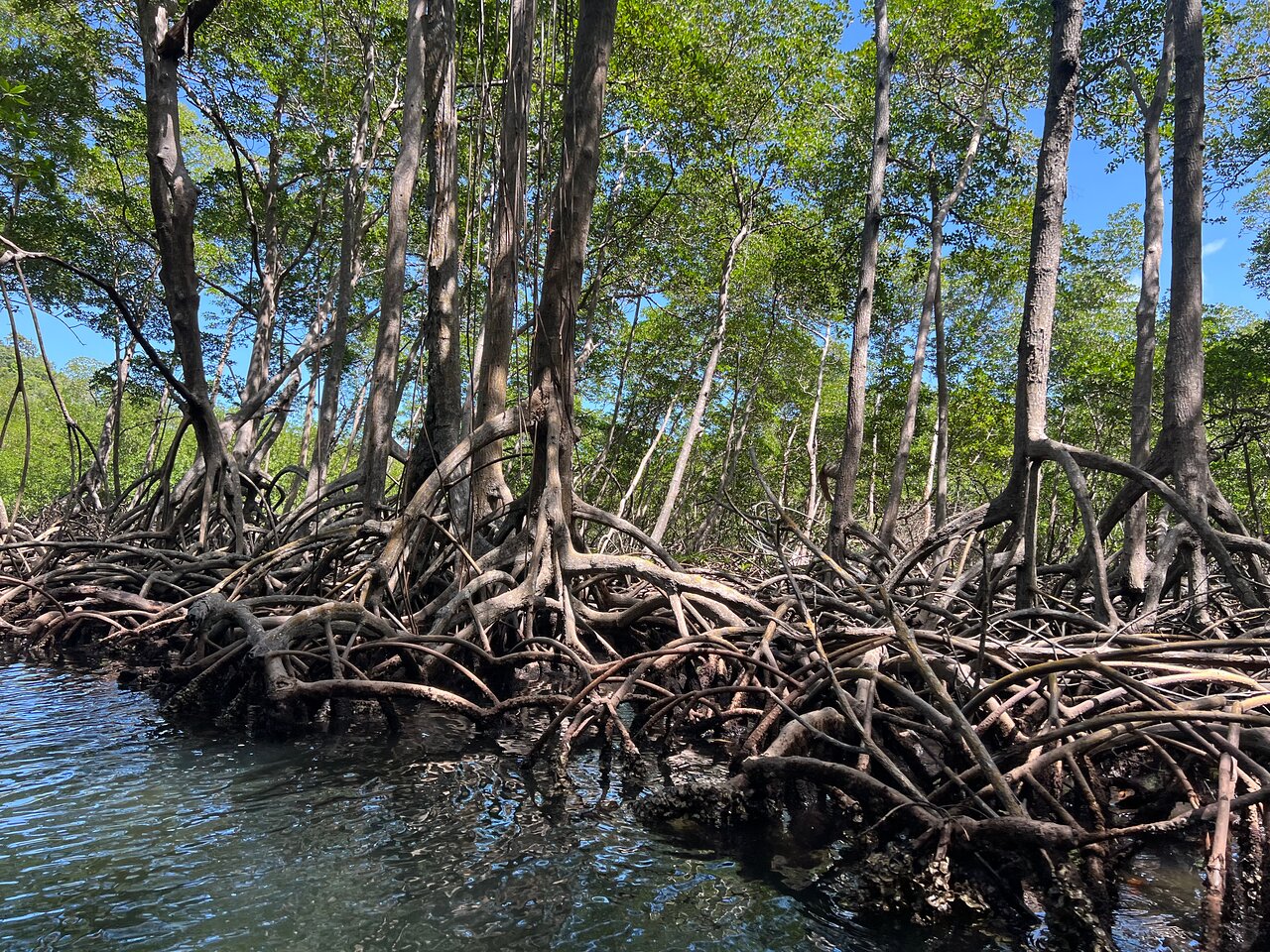
For the Los Haitises region, the important ecological distinction is between freshwater marsh habitat and the park's better-known coastal mangrove ecosystem.
Los Haitises contains a variety of wetland and coastal environments, but not every habitat supports the same bird species. The Purple Gallinule is best understood as a bird associated with vegetated freshwater wetlands rather than as a specialist of tidal mangrove channels.
What Does the Purple Gallinule Eat?
The Purple Gallinule is an omnivore. It consumes a wide variety of plant material and small animals, although plant foods make up an important part of its diet.
Its food can include:
Aquatic plants: Seeds, leaves, flowers, fruits, and other nutritious parts of aquatic vegetation.
Insects: Beetles, grasshoppers, dragonflies, and other insects found around wetland plants.
Small invertebrates: Spiders, snails, worms, and other small animals.
Other small prey: Depending on opportunity, it may also eat frogs and small fish.
The bird often searches for food while walking slowly through vegetation. It may pick seeds directly from plants, examine leaves, or reach for food growing above the water.
This flexible diet helps it use different food sources as wetland conditions change.
How Does the Purple Gallinule Search for Food?
The Purple Gallinule uses several techniques to find food.
It may walk along the water's edge, carefully placing its feet between plants. When it finds something edible, it uses its bill to pick or pull the food.
It can also climb through dense marsh vegetation and reach for seeds, fruits, or leaves. In some situations, it swims while searching for food near the surface.
Unlike a bird that depends on one specific food source, the Purple Gallinule can adjust its feeding behavior according to what is available.
Its feeding activity is also one reason why healthy aquatic vegetation matters. Marsh plants provide both food and the structure that allows the bird to move around safely.
Purple Gallinule Behavior: Walking, Swimming and Climbing
The Purple Gallinule is not simply a bird that stands in shallow water. It is an active wetland forager with several different movement patterns.
Walking through marsh vegetation
It often walks slowly through wetland plants, looking for seeds, leaves, and small animals. Its long legs help it move through shallow water and vegetation.
Moving across floating plants
Its long toes allow it to distribute its weight when stepping onto floating vegetation. This behavior is one of its most distinctive characteristics.
Swimming
Although it spends much of its time walking and foraging, the Purple Gallinule can swim. A swimming bird often moves its head forward rhythmically.
Climbing through vegetation
It may climb among reeds, marsh plants, and waterside shrubs. When moving through uneven vegetation, it can use its wings to help maintain balance.
Calling and communicating
The species is known for loud, sometimes harsh calls, including squawking and cackling sounds. Calls can help birds communicate in vegetation where visibility is limited.
These behaviors make the Purple Gallinule an interesting subject for birdwatchers who observe patiently rather than expecting every bird to remain in the open.
Purple Gallinule vs. Northern Jacana: What Is the Difference?
The Purple Gallinule and Northern Jacana are two interesting wetland birds recorded in the Los Haitises checklist. Both have long toes and can move around aquatic vegetation, but they are different species with distinct appearances.
The Purple Gallinule belongs to the rail family, while the Northern Jacana belongs to the jacana family.
The Purple Gallinule is recognized by its purple-blue body, greenish back, red-and-yellow bill, pale blue frontal shield, and yellow legs.
The Northern Jacana has a different color pattern, with a chestnut-brown body, darker head and neck, and a yellow frontal shield and bill. Its exceptionally long toes and claws are particularly noticeable.
Their feeding and movement styles also differ. Both use wetland vegetation, but the Purple Gallinule has a broader range of walking, swimming, and climbing behaviors.
For a closer look at the other species, read our related guide to the Northern Jacana in Los Haitises.
Breeding and Nesting Habits
Purple Gallinules build nests in dense wetland vegetation, usually close to or above water. Nest materials can include grasses, reeds, and other plant matter.
Depending on the habitat, nests may be anchored among standing vegetation or associated with floating plant material.
Both parents participate in nesting activities, including incubation and care of the young. Chicks can move around soon after hatching, although they still depend on their parents for food and protection.
Breeding patterns vary across the species' extensive range. Information about breeding behavior in other countries should not automatically be treated as evidence of a particular nesting location or breeding season in Los Haitises.
Visitors should never approach suspected nests or attempt to photograph chicks at close range. Disturbance can cause adult birds to leave important nesting areas.
Is the Purple Gallinule Endangered?
The Purple Gallinule is generally classified as Least Concern on the IUCN Red List. This means it is not currently considered globally threatened under that assessment.
However, this does not mean that every local population is free from risk.
Wetland birds depend on suitable water conditions, vegetation, feeding areas, and places to nest. The draining of wetlands, changes in water levels, pollution, and degradation of aquatic vegetation can reduce habitat quality.
Protecting freshwater marshes and wetland edges is therefore important for maintaining suitable habitat for the Purple Gallinule and many other species.
In Los Haitises, responsible tourism and habitat protection should go together. Visitors can support conservation by following park rules, avoiding disturbance, and keeping a respectful distance from wildlife.
Where Should Birdwatchers Look for the Purple Gallinule?
Because the Purple Gallinule is associated with freshwater wetlands, birdwatchers should learn to recognize suitable habitat rather than expect to find it at every stop.
Potentially relevant environments include vegetated ponds, marsh edges, shallow freshwater areas, and wetlands with floating or emergent plants.
A few practical birdwatching tips can improve the experience:
Look for movement among plants. The bird may be partly hidden by reeds and other vegetation.
Watch the edges of floating vegetation. Its long toes and colorful body may become visible as it walks across leaves.
Listen for calls. Vocalizations can reveal the presence of birds that are difficult to see.
Use binoculars. A good pair of binoculars helps you observe without approaching too closely.
Be patient. Wetland birds may remain concealed for long periods before moving into a clearer view.
Most importantly, do not assume that a particular boat route or excursion includes freshwater marsh habitat. Ask about the environments visited if birdwatching is a major reason for your trip.
Responsible Birdwatching in Los Haitises
Los Haitises is an important natural area, and wildlife observation should not interfere with the animals or their habitats.
Follow these responsible birdwatching practices:
- Keep a respectful distance from birds and nests.
- Avoid loud noises and sudden movements.
- Do not feed wild birds.
- Stay on permitted routes and follow park instructions.
- Never remove plants, eggs, feathers, or other natural materials.
- Avoid entering sensitive marsh vegetation.
- Use binoculars or a camera with a suitable zoom instead of approaching wildlife.
Responsible observation helps protect the natural behaviors that make the park valuable to visitors and wildlife alike.
Why the Purple Gallinule Adds to the Wildlife Value of Los Haitises
The Purple Gallinule illustrates an important feature of Los Haitises: the park's wildlife value is not limited to its famous mangroves, limestone formations, caves, and coastal scenery.
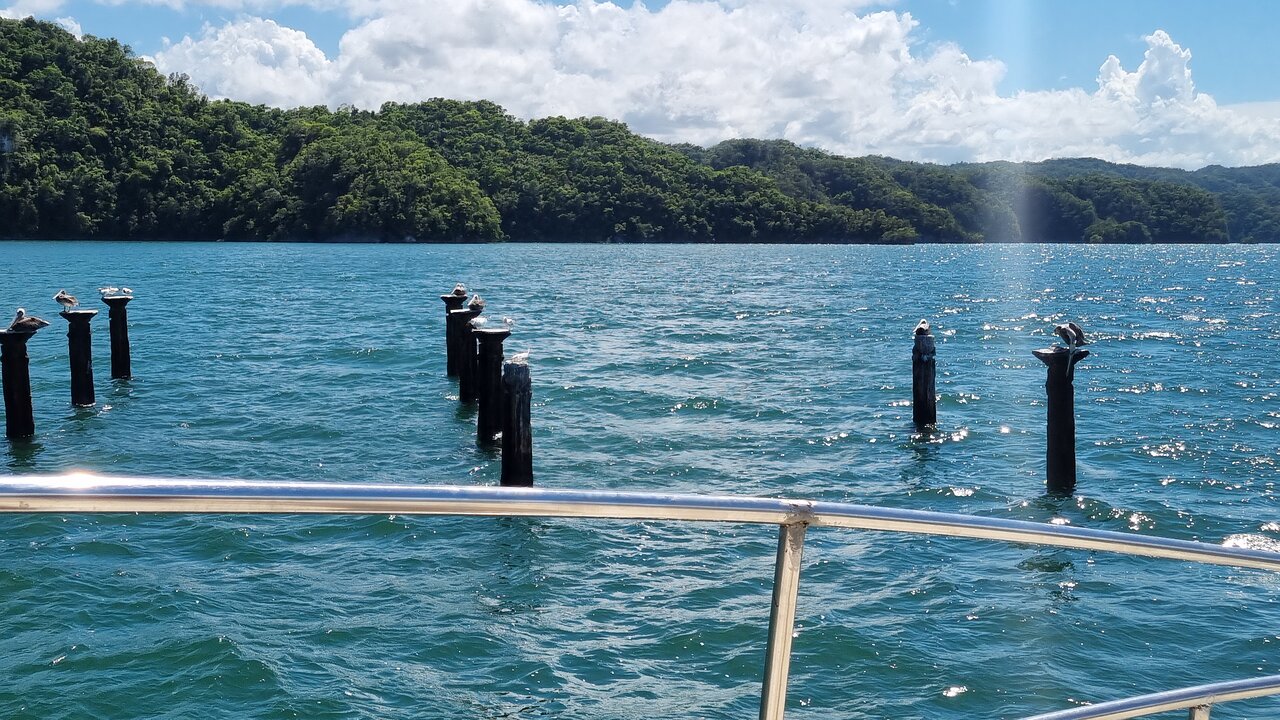
Different wetland environments support different ecological communities. A bird associated with freshwater vegetation has different habitat requirements from a pelican feeding along coastal waters or a forest bird searching for insects among trees.
Learning about these differences helps visitors understand the park as a connected landscape of varied habitats rather than a single type of ecosystem.
The Purple Gallinule's bright colors, unusual feet, flexible diet, and active behavior make it a memorable example of tropical wetland biodiversity.
Frequently Asked Questions
1. Is the Purple Gallinule found in Los Haitises National Park?
Yes. The Purple Gallinule (Porphyrio martinica) appears on the available Los Haitises National Park bird checklist. However, its inclusion does not guarantee a sighting on every visit.
2. What does a Purple Gallinule look like?
An adult has a purple-blue head and body, greenish upperparts, a red bill with a yellow tip, a pale blue frontal shield, and long yellow legs and toes.
3. Why does the Purple Gallinule have long toes?
Its long toes help distribute its weight when walking over floating vegetation and moving through wetland plants.
4. What does the Purple Gallinule eat?
It eats seeds, leaves, flowers, and fruits of aquatic plants, as well as insects, spiders, snails, frogs, and other small animals.
5. Does the Purple Gallinule live in mangroves?
It is primarily associated with freshwater marshes and vegetated wetlands. It should not be described as a specialist of tidal mangrove channels.
6. Can the Purple Gallinule swim?
Yes. It can swim as well as walk, wade, and climb through wetland vegetation.
7. Is the Purple Gallinule endangered?
It is generally classified as Least Concern globally. Nevertheless, wetland habitat loss and degradation can affect local populations.
8. What is the scientific name of the Purple Gallinule?
Its scientific name is Porphyrio martinica.
9. Is the Purple Gallinule the same bird as the Northern Jacana?
No. They are different species from different bird families. Both have long toes and use wetland vegetation, but their appearance and behavior differ.
10. What is the best way to observe a Purple Gallinule?
Use binoculars, watch vegetated wetland edges patiently, listen for calls, and avoid disturbing birds or their habitat. Sightings are never guaranteed.
Explore Los Haitises National Park
Los Haitises offers visitors an opportunity to appreciate a remarkable variety of natural environments, including mangroves, coastal waters, limestone formations, caves, and wetlands.
If you are planning a visit from Sabana de la Mar, consider learning about the habitats included in your excursion before choosing a trip. Travelers especially interested in birds and wildlife should ask whether the itinerary provides opportunities to observe different wetland and forest environments.
Explore the natural landscape responsibly, respect local conservation rules, and enjoy the wildlife without disturbing it.
Discover Los Haitises National Park and experience the biodiversity of one of the Dominican Republic's distinctive natural areas.
Local explorer & expert guide in Birding Dominican Republic.