Saona Island Ocean Thermal Energy Conversion (OTEC): Turning Tropical Ocean Temperature Differences into Electricity
Introduction
The ocean stores an enormous amount of thermal energy. Sunlight warms its upper layers, while deeper water remains much colder. In tropical regions, the temperature difference between warm surface seawater and cold deep seawater can be used to operate a special type of heat engine.
This technology is called Ocean Thermal Energy Conversion (OTEC).
Unlike wave-energy systems, which capture the movement of ocean waves, OTEC uses a temperature gradient to generate electricity. It is particularly interesting for tropical islands because the ocean may provide a relatively consistent source of warm surface water and cold deep water.
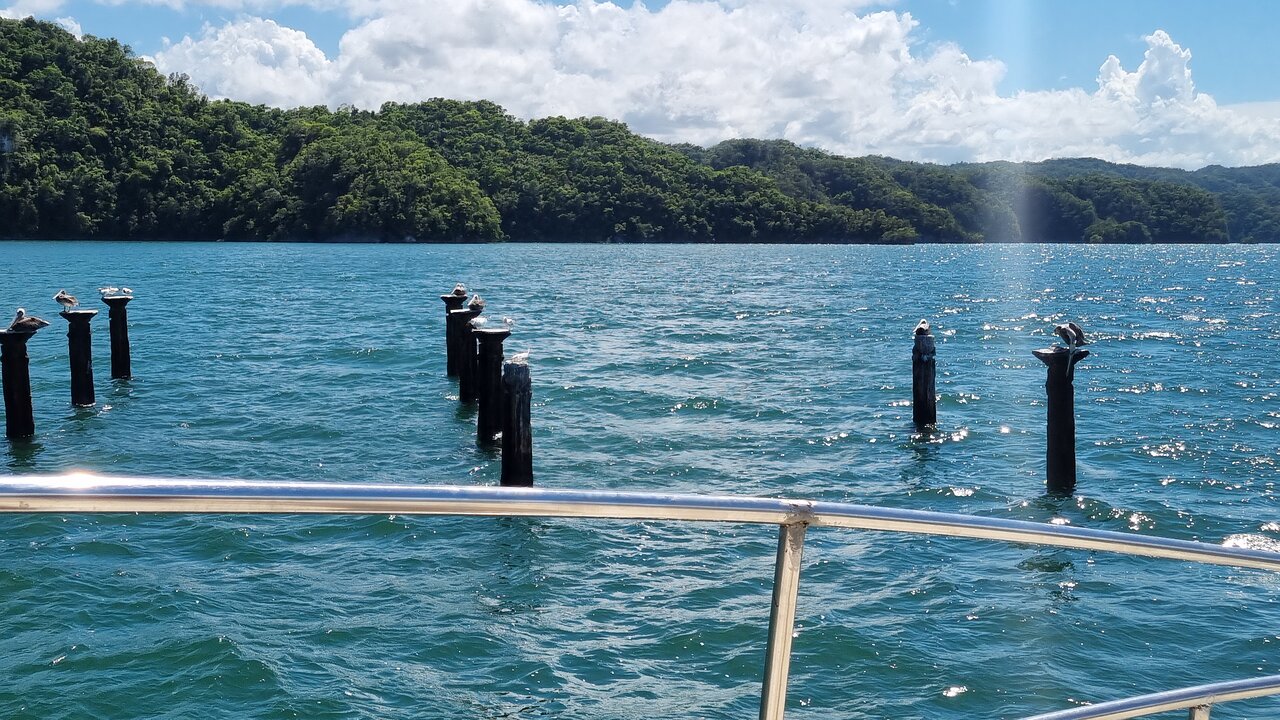
Saona Island, in the Dominican Republic, offers an interesting setting for discussing this technology. However, a real OTEC project would require detailed temperature measurements, bathymetric surveys, environmental assessment and engineering feasibility studies. Tropical location alone does not prove that a particular site is suitable.
This article explains the science behind OTEC, its main operating cycles, the equipment required, potential applications and the challenges that engineers would need to investigate before considering an installation around Saona Island.
1. What Is Ocean Thermal Energy Conversion?
Ocean Thermal Energy Conversion is a renewable-energy technology that produces electricity by using the temperature difference between:
- Warm seawater near the ocean surface.
- Cold seawater drawn from deeper ocean layers.
The warm water provides heat to a thermodynamic cycle, while the cold water acts as a heat sink.
A heat engine operates between these two temperature levels. It converts part of the thermal energy into mechanical work, which drives an electrical generator.
A temperature difference of approximately 20°C is commonly used as a preliminary OTEC resource-screening benchmark. The actual operating requirements depend on the system design, available temperatures, heat exchangers and pumping losses.
The basic OTEC process involves:
- Collecting warm surface seawater.
- Collecting cold deep seawater.
- Transferring heat from the warm water into a working fluid or producing low-pressure steam.
- Driving a turbine or another expansion device.
- Operating an electrical generator.
- Removing heat using cold seawater.
- Returning the working fluid to its initial condition.
The U.S. Energy Information Administration explains the closed-cycle and open-cycle principles and identifies electricity and desalinated water as possible OTEC outputs.
2. The Ocean Temperature Gradient
The temperature of seawater generally changes with depth.
In tropical oceans, solar radiation warms the surface and upper ocean. Below the surface mixed layer, temperatures may decrease rapidly through a region called the thermocline.
At greater depths, water temperatures are usually much colder and vary more slowly with depth.
For an OTEC system, engineers need to know the temperature difference between the proposed warm-water intake and cold-water intake locations.
It can be expressed as:
ΔT = Tₕ − T꜀
Where:
- ΔT = temperature difference.
- Tₕ = warm-water temperature.
- T꜀ = cold-water temperature.
For example, if the warm-water intake is at 27°C and the cold-water intake is at 5°C:
ΔT = 27 − 5 = 22°C
This example illustrates a potentially useful temperature difference. It is not a measurement from Saona Island.
The temperature gradient must be evaluated using actual oceanographic data. Seasonal variation, depth, currents and local seabed conditions all influence the available resource.
3. The Thermodynamic Principle Behind OTEC
OTEC operates as a heat engine.
A heat engine receives energy from a warmer source, converts part of that energy into useful work and releases the remaining heat to a colder sink.
The theoretical maximum efficiency of an ideal reversible heat engine is given by the Carnot efficiency:
η = 1 − (T꜀ / Tₕ)
Where:
- η = theoretical maximum efficiency.
- Tₕ = absolute temperature of the hot reservoir in Kelvin.
- T꜀ = absolute temperature of the cold reservoir in Kelvin.
Consider an illustrative system with:
- Warm water temperature = 27°C = 300.15 K.
- Cold water temperature = 4°C = 277.15 K.
Then:
η = 1 − (277.15 / 300.15)
The theoretical maximum is approximately 7.7%.
This is not the actual electrical efficiency of an OTEC plant. Real systems experience heat-transfer losses, turbine and generator losses, friction and significant pumping requirements.
The net efficiency is therefore much lower than the ideal Carnot limit. The low efficiency is one reason OTEC requires large heat exchangers and substantial seawater flow.
IEC technical guidance and engineering reviews discuss this fundamental limitation.
4. Main Types of OTEC Systems
OTEC technology is commonly divided into three configurations: closed-cycle, open-cycle and hybrid-cycle systems.
4.1 Closed-Cycle OTEC
A closed-cycle system uses a separate working fluid that circulates through a sealed thermodynamic loop.
A fluid with a relatively low boiling point, such as ammonia, can be used in suitable system designs.
The operating process is:
- Warm seawater passes through an evaporator.
- Heat transfers from the seawater to the working fluid.
- The working fluid vaporises.
- The vapour expands through a turbine.
- The turbine drives an electrical generator.
- Cold deep seawater passes through a condenser.
- The working-fluid vapour condenses back into liquid.
- A pump returns the liquid to the evaporator.
The working fluid circulates continuously.
Main advantages:
- The working fluid can be selected for the operating temperature range.
- The cycle can be designed around established heat-engine principles.
- It can be suitable for electricity-focused systems.
Main challenges:
- Requires two major heat exchangers.
- Working-fluid containment must be reliable.
- Heat exchangers can be affected by fouling and corrosion.
- Pumping energy reduces net electricity output.
4.2 Open-Cycle OTEC
An open-cycle system uses seawater itself as the working fluid.
Warm seawater enters a low-pressure chamber. Under sufficiently low pressure, some of the water evaporates or flashes into steam at a lower temperature than it would at atmospheric pressure.
The low-pressure steam passes through a turbine connected to a generator.
Cold deep seawater then cools the steam in a condenser.
Because the steam is separated from most of the original salt, condensation can produce desalinated water.
The process can therefore provide two potential outputs:
- Electricity.
- Freshwater.
However, open-cycle systems require careful vacuum control and large low-pressure equipment. The very low pressure of the steam also creates challenges for turbine design.
4.3 Hybrid-Cycle OTEC
Hybrid systems combine elements of open-cycle and closed-cycle configurations.
One possible arrangement uses flash evaporation of warm seawater to create steam. That steam transfers heat to a separate working fluid, which drives a turbine in a closed loop.
Depending on the design, hybrid arrangements may support both electricity generation and freshwater production.
The best configuration depends on the required outputs, local seawater conditions, plant scale and engineering economics.
The U.S. Department of Energy describes all three main OTEC cycle types.
5. Main Components of an OTEC Plant
An OTEC plant requires several interconnected mechanical, thermal, hydraulic and electrical systems.
Warm-water intake
The warm-water intake collects seawater from the upper ocean.
Its depth and location should be selected using temperature measurements, water-quality information and local hydrodynamic conditions.
Cold-water pipe
A large pipe transports cold seawater from deep ocean layers to the plant.
This is one of the most important and challenging parts of an OTEC installation.
The pipe must be designed to withstand:
- External water pressure.
- Its own weight.
- Current and wave loading.
- Vortex-induced vibration.
- Fatigue.
- Marine growth.
- Installation and maintenance stresses.
The required intake depth depends on the local temperature profile and project design.
Evaporator
In a closed-cycle plant, the evaporator transfers heat from warm seawater to the working fluid.
Its performance affects how much thermal energy enters the cycle.
Turbine or expander
The expanding vapour drives a turbine or other suitable expansion device.
The mechanical output is transferred to a generator.
Condenser
The condenser removes heat from the working fluid or steam using cold seawater.
It returns the vapour to a liquid state so that the cycle can continue.
Pumps
Pumps move warm seawater, cold seawater and the working fluid through their respective circuits.
Because OTEC requires large seawater flow rates, pump energy consumption can significantly affect net electricity production.
Electrical generator and power system
The generator converts mechanical rotation into electricity.
Power electronics, protection equipment, transformers and cables are then used to deliver electricity to a suitable load or distribution network.
6. Why the Cold-Water Pipe Is a Major Engineering Challenge
A cold-water pipe may extend hundreds of metres below the sea surface and can approach much greater depths depending on the resource and site.
Its design is not simply a matter of selecting a pipe diameter.
Engineers must investigate:
Hydrostatic pressure: External water pressure increases with depth. The pipe must resist collapse and maintain structural integrity.
Dynamic loading: Waves and currents can cause movement, vibration and cyclic stresses.
Pipe material: Materials must be suitable for seawater exposure, long-term loading and the required installation method.
Mooring and support: Offshore systems need an appropriate arrangement to maintain the pipe's position.
Installation: Handling, lowering and connecting a large pipe in deep water can require specialised marine equipment.
Inspection and repair: The pipe must be accessible for monitoring and maintenance.
A failure in the cold-water delivery system can interrupt the entire plant. Cold-water pipe reliability is therefore central to OTEC project feasibility.
7. Heat Exchangers and Thermal Performance
Heat exchangers transfer thermal energy between seawater and the working fluid.
In OTEC, the available temperature difference is relatively small. This makes efficient heat transfer especially important.
Common engineering considerations include:
- Heat-transfer surface area.
- Temperature difference across the exchanger.
- Seawater flow rate.
- Working-fluid flow rate.
- Pressure drop.
- Material compatibility.
- Fouling resistance.
- Cleaning and maintenance requirements.
The heat-transfer rate can be expressed in simplified form as:
Q = U × A × ΔTₘ
Where:
- Q = heat-transfer rate.
- U = overall heat-transfer coefficient.
- A = heat-transfer surface area.
- ΔTₘ = suitable mean temperature difference.
A large heat-transfer area may be required because the temperature difference between the streams is limited.
Materials such as titanium and other corrosion-resistant alloys may be considered, depending on the seawater chemistry, design pressure and cost.
Marine biofouling can reduce heat-transfer performance over time. A maintenance strategy must therefore be included from the beginning.
8. OTEC and Seawater Air Conditioning
OTEC can be connected with another useful technology known as Seawater Air Conditioning (SWAC).
SWAC uses cold deep seawater as a cooling resource.
Instead of relying entirely on conventional refrigeration equipment, a building cooling system transfers heat to a cold seawater circuit through heat exchangers.
The basic process is:
- Cold deep seawater is transported to a suitable facility.
- A heat exchanger transfers heat from a building cooling circuit to the seawater.
- The cooled building-water circuit supplies air-conditioning equipment.
- The seawater is discharged or returned through an appropriately designed system.
SWAC does not generate electricity in the same way as OTEC. It uses the cold-water resource directly for cooling.
For tropical island facilities, it may be worth evaluating as a separate or integrated energy-service option.
Its feasibility depends on the distance to deep water, elevation, pipe installation cost, cooling demand and pumping requirements.
9. Can OTEC Also Produce Freshwater?
Yes. Open-cycle and selected hybrid OTEC arrangements can produce desalinated water.
In an open-cycle system, warm seawater is evaporated under reduced pressure. The resulting water vapour contains much less salt than the original seawater.
When the vapour is condensed, freshwater is collected.
This is an important potential benefit for island applications where freshwater supply may be a planning concern.
However, freshwater production must be assessed alongside electrical output. The plant's water production rate, energy requirements, water quality and distribution infrastructure all matter.
OTEC should not be described as an automatic solution to an island's water needs. It would require a complete water-treatment and supply assessment.
10. Potential OTEC Research Applications Around Saona Island
A tropical location can make OTEC worth investigating, but the project must first establish whether the required temperature gradient and deep-water access are available at a practical distance.
Potential applications for a research programme include:
Renewable electricity assessment
A study could investigate whether a suitable ocean temperature gradient exists near a possible intake location and whether the expected net electrical output would justify the infrastructure.
Freshwater production research
Open-cycle OTEC could be examined as a potential combined electricity-and-freshwater technology.
Seawater cooling
Deep seawater cooling could be evaluated for suitable facilities if the required cold-water pipeline and distribution system are economically practical.
Marine research facilities
A combined energy and cooling concept could be assessed for scientific or educational facilities, subject to site conditions and environmental approvals.
Hybrid energy systems
OTEC could be studied alongside solar photovoltaic generation and battery storage.
A hybrid arrangement might help diversify energy supply, but its technical and economic benefits must be demonstrated with demand and resource data.
These are possible research applications, not evidence of an existing OTEC facility or confirmed resource around Saona Island.
11. Is the Caribbean Suitable for OTEC?
The Caribbean region is frequently discussed in OTEC resource assessments because tropical ocean temperatures can provide a substantial difference between surface and deep water.
A regional technology review published by the Inter-American Development Bank examines OTEC operational requirements and resource potential across the Caribbean.
The review identifies an approximate 20°C temperature difference as an important screening condition and explains why access to deep cold water close to shore is important for project economics.
However, regional potential does not establish local feasibility.
For a Saona Island project, researchers would need to examine:
- Surface temperature throughout the year.
- Temperature profiles at different depths.
- Distance from shore to the required cold-water intake depth.
- Seabed slope and bathymetry.
- Offshore current and wave conditions.
- Pipeline route and installation constraints.
- Electricity demand and connection options.
- Environmental and protected-area requirements.
The distance to deep water can be just as important as the temperature difference. A location may have a useful thermal gradient but still be uneconomic if the cold-water pipe must be extremely long or difficult to install.
12. Environmental Impacts of OTEC
OTEC uses seawater rather than burning fossil fuels during its energy-conversion process. Nevertheless, large installations can affect the marine environment.
Deep-water discharge
Cold water brought to the surface may differ from surface water in temperature, nutrient concentration and dissolved gases.
Discharging it at an inappropriate depth or location could alter local water conditions.
Nutrient redistribution
Deep seawater may contain higher concentrations of certain nutrients than surface water.
Discharge could influence local biological productivity. The effect would depend on the volume, chemistry, depth and mixing of the discharge.
Marine organisms
Intake systems may entrain or impinge marine organisms if screening and intake design are inadequate.
Seabed disturbance
Pipelines, anchors and offshore foundations may disturb the seabed during construction and maintenance.
Chemical and working-fluid risks
Closed-cycle systems require secure containment of their working fluid. Leaks must be prevented through suitable equipment, monitoring and emergency procedures.
Thermal and water-quality effects
The combined discharge of warm and cold streams must be designed and assessed carefully.
Environmental modelling and field monitoring should be used to evaluate potential impacts before a project is approved.
The PNNL Tethys environmental assessment report highlights the importance of understanding deep-water discharge, marine effects and community engagement.
13. Economic Challenges of OTEC
OTEC can provide a potentially steady renewable-energy resource in suitable tropical locations, but the technology has substantial infrastructure requirements.
Major cost elements include:
- Offshore and onshore plant construction.
- Deep-water intake pipelines.
- Heat exchangers.
- Turbines and generators.
- Pumps and electrical equipment.
- Offshore installation vessels.
- Mooring and foundation systems.
- Corrosion protection.
- Marine maintenance.
- Environmental monitoring.
- Power transmission and water distribution.
The low thermodynamic efficiency means that a large volume of seawater must be moved to generate useful electrical output.
Pumping power can consume a significant part of the gross generation. Therefore, engineers must calculate net power, not just the electricity produced by the turbine.
A project also needs a realistic assessment of equipment lifetime, maintenance access, replacement costs and electricity demand.
For Saona Island, OTEC should be compared with solar power, battery storage, other renewable options and existing electricity arrangements before any investment decision.
14. A Proposed OTEC Feasibility Study for Saona Island
A responsible study could be organised into eight stages.
Stage 1 – Ocean temperature research
Collect reliable temperature profiles from the surface to the required deep-water range. Review seasonal and longer-term variation.
Stage 2 – Bathymetric investigation
Use authoritative bathymetric data and, where needed, new hydrographic surveys to determine how quickly the seabed reaches suitable depths.
Stage 3 – Site screening
Identify possible locations by considering temperature difference, distance to deep water, seabed conditions, environmental sensitivity and access.
Stage 4 – Conceptual system selection
Compare closed-cycle, open-cycle and hybrid-cycle configurations according to the intended outputs.
Stage 5 – Engineering design
Develop preliminary designs for cold-water pipelines, heat exchangers, pumps, turbines, foundations and electrical systems.
Stage 6 – Energy and economic modelling
Estimate gross and net output, auxiliary energy consumption, annual operating performance and life-cycle cost.
Stage 7 – Environmental assessment
Evaluate intake and discharge effects, seabed disturbance, marine habitats, water chemistry and possible community concerns.
Stage 8 – Pilot or demonstration decision
Only after the technical, environmental and economic assessments support feasibility should a demonstration project be considered.
This is a proposed research framework. It does not claim that OTEC measurements, installations or feasibility studies have already been completed around Saona Island.
15. The Future of Ocean Thermal Energy
OTEC research continues to investigate improvements in:
- Heat-exchanger performance.
- Cold-water pipe materials and structural reliability.
- Turbine and working-fluid selection.
- Pumping efficiency.
- Biofouling prevention.
- Integrated freshwater production.
- Seawater cooling.
- Hybrid renewable-energy systems.
- Environmental monitoring and discharge design.
- Modular and smaller-scale applications.
Researchers are also exploring integrated uses of deep seawater beyond electricity generation.
The long-term success of OTEC will depend on improving net power output, reducing installation and maintenance costs, and demonstrating reliable operation in real marine environments.
Frequently Asked Questions
1. What is OTEC?
Ocean Thermal Energy Conversion is a technology that generates electricity using the temperature difference between warm surface seawater and cold deep seawater.
2. How much temperature difference is needed for OTEC?
Approximately 20°C is commonly used as a preliminary resource-screening benchmark. Actual requirements depend on the plant design and its net performance.
3. Does OTEC work at night?
Yes. Unlike solar photovoltaic systems, OTEC does not depend directly on sunlight at the moment of electricity generation. It uses the ocean's thermal gradient, although actual performance depends on changing ocean conditions and plant operation.
4. What are the three main OTEC cycles?
The three main configurations are closed-cycle, open-cycle and hybrid-cycle OTEC.
5. Can OTEC produce drinking water?
Open-cycle and some hybrid arrangements can produce desalinated water. Water quality, treatment and distribution still need to be addressed.
6. Why does OTEC require a deep-water pipe?
The system needs cold seawater from deeper ocean layers to act as the cold reservoir in the thermodynamic cycle.
7. Is OTEC suitable for Saona Island?
It is a potential research topic, but suitability cannot be confirmed without local temperature profiles, bathymetry, pipeline-route assessment, environmental studies and economic modelling.
8. What is the difference between OTEC and wave energy?
Wave energy captures mechanical energy from moving ocean waves. OTEC converts thermal energy from the temperature difference between warm surface water and cold deep water.
9. What is SWAC?
Seawater Air Conditioning uses cold deep seawater to support building cooling through a heat-exchange system. It is related to deep-seawater infrastructure but is not the same as electricity generation through OTEC.
Conclusion
Ocean Thermal Energy Conversion offers an unusual way to generate renewable electricity by using the natural temperature difference between tropical surface water and cold deep seawater.
Its closed-cycle, open-cycle and hybrid configurations demonstrate how thermodynamics, heat transfer, marine structures and electrical engineering can work together. Some systems can also provide freshwater or support seawater-based cooling.
For Saona Island, OTEC is a subject for careful technical investigation rather than a confirmed development opportunity. A useful feasibility study would need accurate ocean temperature profiles, detailed bathymetry, cold-water pipeline design, net-power calculations and environmental assessment.
The central engineering challenge is to obtain enough useful energy from a relatively small temperature difference while keeping the large seawater pumping and infrastructure requirements manageable.
The ocean's temperature gradient may offer a renewable-energy opportunity for tropical islands, but local measurements and complete engineering analysis must determine whether that opportunity is practical.

Local explorer & expert guide in Birding Dominican Republic.