Hispaniolan Parakeet in Los Haitises: How to Recognize This Native Caribbean Bird
The forests and landscapes of the Dominican Republic are home to several remarkable native birds. One of them is the Hispaniolan parakeet (Psittacara chloropterus), a lively green bird known for its long tail, red wing markings and loud calls.
Also called the Hispaniolan conure, this parakeet is native to Hispaniola, the Caribbean island shared by the Dominican Republic and Haiti. It is a social bird that often travels in pairs or flocks and feeds on fruits, seeds and other plant material.
The species has an interesting connection to Los Haitises National Park. Historical research documented a dramatic decline in the park's parakeet population during the late twentieth century. This makes the bird an important example of why protecting natural habitats and understanding local wildlife records matter.
This guide explains how to recognize the Hispaniolan parakeet, how it behaves, where it lives and what threatens its survival.
What Is the Hispaniolan Parakeet?
The Hispaniolan parakeet is a member of the parrot family, Psittacidae. Its scientific name is Psittacara chloropterus. It is also known as the Hispaniolan conure or San Domingo conure.
The species is native to Hispaniola and is found in both the Dominican Republic and Haiti. It is not the same bird as the Hispaniolan parrot (Amazona ventralis), although the two species share the same island and some habitat requirements.
The parakeet is generally around 32 centimetres long, including its long tail. Its body is mostly green, with distinctive red markings on parts of the wings.
Its appearance, calls and social behavior make it an interesting species for people learning about Caribbean birds.
How to Identify a Hispaniolan Parakeet
The easiest way to recognize this species is to look for its combination of green plumage, red wing markings and long tail.
1. Mostly green body
Adult Hispaniolan parakeets are predominantly green. Their green feathers help them blend into leafy trees, particularly when they are feeding quietly in the canopy.
2. Red markings on the wings
One of the most useful identification features is the red coloring around the bend and outer portions of the wing. These markings can become more noticeable when a bird flies or stretches its wings.
The amount of visible red can vary between individuals.
3. Long, tapered tail
The bird has a relatively long tail that gives its body a slender appearance. This is particularly noticeable when it is perched or flying.
4. Curved beak
Like other parrots, the Hispaniolan parakeet has a strong, curved beak. This helps it handle seeds, fruits and other foods.
5. Pale eye ring and yellow eye
Adults have a pale, bare eye ring and a yellow iris. These features can help distinguish the species when viewed clearly through binoculars or a camera with a suitable lens.
Juveniles may show less red on their wings and different coloration around the eye and base of the beak.
Hispaniolan Parakeet vs. Hispaniolan Parrot: What Is the Difference?
Visitors sometimes confuse the Hispaniolan parakeet with the Hispaniolan parrot. Both are native to Hispaniola and are mostly green, but they belong to different genera and have different identifying features.
FeatureHispaniolan parakeetHispaniolan parrotScientific namePsittacara chloropterusAmazona ventralisCommon alternative nameHispaniolan conureHispaniolan AmazonGeneral sizeAbout 32 cmAbout 28–31 cmBody appearanceSlender, long-tailedMore compact, stockierDistinctive markingsRed markings on the wingsWhite forehead, blue markings and maroon belly patchSocial behaviorOften pairs or flocksOften pairs or groupsGlobal IUCN category in cited 2020 assessmentsVulnerableVulnerable
The most practical identification clue is the wing pattern. A green bird with visible red wing markings and a long, slender tail may be a Hispaniolan parakeet. A bird with a white forehead and reddish lower-belly patch is more likely to be a Hispaniolan parrot.
Always use several features together rather than relying on one color or a distant glimpse.
Where Does the Hispaniolan Parakeet Live?
The Hispaniolan parakeet is native to Hispaniola. Its historical range included a variety of wooded environments across the island.
It has been associated with:
- Upland and montane forests.
- Pine forests.
- Arid lowland woodland.
- Palm savannas.
- Other landscapes containing suitable trees and feeding resources.
The World Parrot Trust describes the species as occurring at elevations up to approximately 3,000 metres.
However, its historical distribution should not be confused with its present-day distribution. The parakeet has disappeared from many areas where it was once recorded.
An important note about Los Haitises
Los Haitises has historical significance for this species, but visitors should not assume that the parakeet is currently a regular or easily observed bird in the park.
A 2021 scientific study reported that the Hispaniolan parakeet experienced a decline of at least 95% in Los Haitises National Park between 1976 and 1996 and was declared locally extirpated shortly afterward.
An Avibase checklist updated in October 2025 includes the species in its Los Haitises list. However, a checklist entry by itself does not establish that a species has a stable, breeding or regularly observed population at a particular location.
For accurate visitor information, current field observations should be checked before describing the parakeet as a reliably present Los Haitises species.
This distinction is important for responsible wildlife tourism and trustworthy travel writing.
What Does the Hispaniolan Parakeet Eat?
The Hispaniolan parakeet is primarily a fruit- and seed-eating bird.
Its natural diet includes fruits from trees and other plants, seeds and flowers. Research and species references also report feeding on plants such as Ficus, Clusia, Bursera and Coccoloba.
The species may also feed on cultivated crops, including maize. This can bring birds into contact with agricultural areas and sometimes create conflict with farmers.
Its feeding behavior has an ecological role. By consuming fruits and seeds, parrots participate in the movement of plant material through their habitats. The exact contribution to seed dispersal depends on the plant and how the bird handles its food.
Visitors should never offer food to wild parakeets. Human snacks are not a suitable substitute for their natural diet, and feeding can change wildlife behavior.
How Does the Hispaniolan Parakeet Behave?
The Hispaniolan parakeet is a social and vocal bird. It is often seen in pairs or small flocks, although larger groups may gather in suitable locations.
Traveling in flocks
Parakeets may move together between feeding areas and roosting sites. A group flying overhead can be easier to notice than a single bird hidden among leaves.
Loud calls
The species has shrill, screeching calls that can be heard when birds are flying or perched.
Listening for calls can help birdwatchers detect parakeets, although sound alone is not enough to confirm identification.
Feeding high in trees
Parakeets may feed quietly in the upper parts of tree canopies. Their green plumage can make them difficult to see even when they are nearby.
Gathering at roosting locations
Groups may gather at traditional nighttime roosts. These locations can be important for social behavior, but sensitive roosting sites should not be disturbed.
How Does the Hispaniolan Parakeet Nest?
The Hispaniolan parakeet is a cavity-nesting species. It uses enclosed spaces such as tree hollows for breeding.
Suitable nesting cavities are an important resource because the bird cannot simply build an exposed nest on any branch.
The Hispaniolan woodpecker may help create cavities that other species can later use. Research on the parakeet has examined this relationship, although scientists have found that the species' nesting ecology is not fully understood.
The World Parrot Trust reports a clutch size of approximately two to four eggs. Its species information also describes nesting in tree hollows and arboreal termite structures.
Protecting mature trees and natural nesting sites is therefore an important part of habitat conservation.
Visitors should never approach, touch or attempt to photograph active nests at close range.
Why Is the Hispaniolan Parakeet Vulnerable?
The Hispaniolan parakeet is classified as Vulnerable in the BirdLife International assessment published on the IUCN Red List in 2020.
That assessment estimated approximately 1,500–7,000 mature individuals and reported a decreasing population trend. These figures refer to the 2020 assessment and should not be treated as a verified population count for 2026.
Several pressures have contributed to the species' decline.
1. Habitat loss
Forest clearing removes feeding areas and nesting trees. When suitable habitats become fragmented, parakeets may have fewer places to feed, breed and move between locations.
The historical decline in Los Haitises demonstrates how seriously local populations can be affected.
2. Hunting and persecution
Parakeets have sometimes been killed because they feed on agricultural crops. This conflict can be especially serious where birds and farms share the same landscape.
3. Capture for the pet trade
The species has also been affected by trapping and trade. Removing wild birds can reduce local populations and disrupt their social groups.
4. Loss of nesting cavities
Because the species depends on cavities, the removal of old trees can reduce suitable breeding sites.
Even where feeding habitat remains, a lack of nesting locations can limit reproduction.
Can Hispaniolan Parakeets Live in Cities?
One surprising part of this species' story is that urban green spaces can support important populations.
A scientific study published in Urban Ecosystems in April 2021 examined the parakeet population in Santo Domingo. Researchers found that parakeet presence was positively associated with tree diversity and the number of green spaces.
The study described Santo Domingo as supporting the densest remaining population known at that time. It also highlighted the value of parks and gardens as feeding areas.
This does not mean urban development is always beneficial to wildlife. Rather, it shows that green spaces, mature trees and suitable nesting structures can make a difference even in heavily modified environments.
The findings offer a useful conservation lesson: protecting trees and connected green spaces matters both inside and outside national parks.
Is the Hispaniolan Parakeet Found in Los Haitises Today?
This question deserves a careful answer.
Historical records show that the species once occurred in Los Haitises, but research documented a severe decline and local disappearance during the late twentieth century.
The presence of the species on a regional checklist should not automatically be interpreted as proof of a healthy current population in the park.
For visitors, the most accurate approach is to enjoy the wider birdlife of Los Haitises without expecting to see this particular parakeet.
If a recent, reliable field observation confirms its presence, that information can be added with the observation date and source. Until then, it is better to describe the parakeet as a species of historical conservation importance to the area rather than a guaranteed wildlife sighting.
How Can Visitors Support Parakeet Conservation?
Even if visitors do not encounter the Hispaniolan parakeet during a trip, they can help support the broader conservation goals that benefit native birds.
Respect natural habitats. Stay on permitted routes and avoid damaging trees or vegetation.
Do not buy wild-caught birds. Purchasing captured wildlife can encourage further removal from natural populations.
Never disturb nests. Tree cavities may contain eggs or young birds, and disturbance can affect breeding success.
Avoid feeding wildlife. Let birds find their own natural food.
Support responsible tourism. Choose operators who respect protected-area rules and do not encourage harmful wildlife interactions.
Learn about local conservation. Understanding the history of native species helps visitors appreciate why habitat protection matters.
Why This Bird Matters to the Natural Heritage of Hispaniola
The Hispaniolan parakeet is a distinctive part of the island's biodiversity. Its green body, red wing markings, long tail and social calls make it an interesting species to learn about.
Its history in Los Haitises also tells a more serious story. A bird once recorded in the park experienced a major local decline, demonstrating that even protected landscapes can face significant conservation challenges.
The species' experience highlights the importance of preserving mature trees, protecting nesting sites, reducing hunting and trapping, and maintaining suitable habitats across Hispaniola.
For travelers exploring the Dominican Republic, learning about the Hispaniolan parakeet adds depth to an understanding of the country's natural environment. It also reminds us that responsible nature tourism is about more than spotting wildlife: it is about respecting the ecosystems that allow wildlife to survive.
Frequently Asked Questions
1. What is the scientific name of the Hispaniolan parakeet?
Its scientific name is Psittacara chloropterus. It is also known as the Hispaniolan conure.
2. What does a Hispaniolan parakeet look like?
It is mainly green, with red markings around parts of its wings, a long tapered tail, a curved beak and a pale eye ring.
3. Is the Hispaniolan parakeet the same as the Hispaniolan parrot?
No. The parakeet is Psittacara chloropterus, while the Hispaniolan parrot is Amazona ventralis. They are two different native species.
4. Where does the Hispaniolan parakeet live?
It is native to Hispaniola, including the Dominican Republic and Haiti. Its habitats include forest, upland woodland, pine forest and palm savanna.
5. Is the Hispaniolan parakeet endangered?
The BirdLife International assessment published in 2020 classifies it as Vulnerable. The assessment reported a decreasing population trend.
6. Does the Hispaniolan parakeet still live in Los Haitises?
Historical research documented a severe decline and local extirpation in Los Haitises during the late twentieth century. A current, stable population should not be assumed without recent field evidence.
7. What does the Hispaniolan parakeet eat?
It feeds mainly on fruits, seeds and other plant material, and may sometimes feed on agricultural crops.
8. Why is the Hispaniolan parakeet threatened?
Major pressures include habitat loss, hunting, persecution as a crop pest, trapping and the loss of suitable nesting cavities.
9. Can tourists photograph Hispaniolan parakeets?
Photography is appropriate when a wild bird is encountered naturally and can be observed without disturbance. Visitors should never approach nests or use food to attract birds.
10. How can I help protect native birds in the Dominican Republic?
Respect protected habitats, avoid buying wild-caught birds, do not disturb nests, keep natural areas clean and support responsible conservation-minded tourism.
Explore the Wildlife and Landscapes of Los Haitises
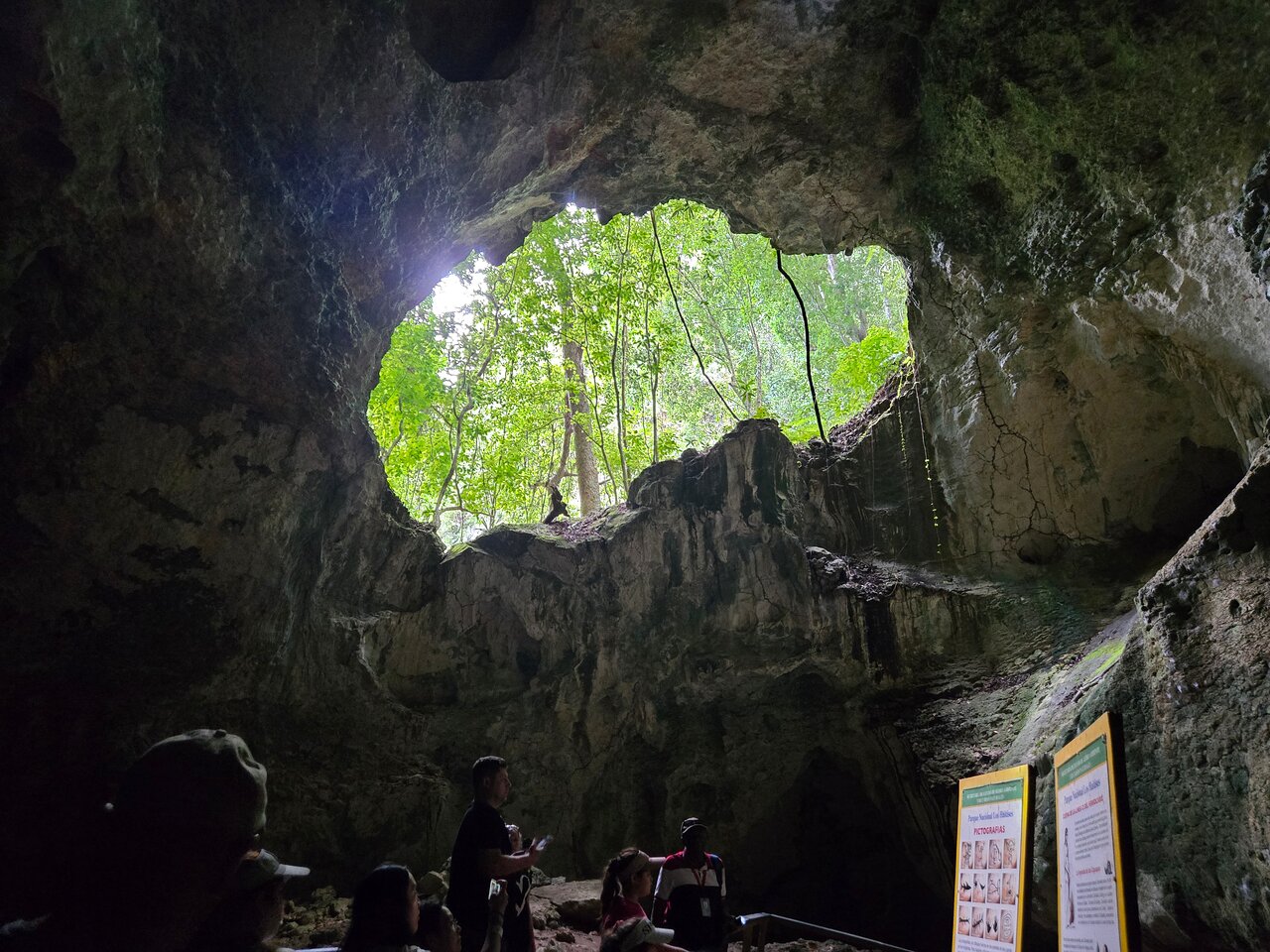
Los Haitises National Park is a valuable destination for learning about the Dominican Republic's forests, mangroves, caves and native wildlife. Its conservation history also shows why protecting natural habitats is essential.
Plan a visit that respects park rules and the needs of wild animals. Confirm current routes, access conditions and available services directly with the relevant operator.
Discover Los Haitises: Visit LosHaitisesParkTours.com for destination information and available nature-tour options.
Local explorer & expert guide in Birding Dominican Republic.


